 skills
AI Integration in the VET Sector for Australian RTOs
Australian Registered Training Organisations RTOs are operating in an environment where compliance pressure, operational efficiency and training quality must be balanced at the same time. Leaders are expected to deliver measurable outcomes while managing growing administrative complexity. In response, many institutions are adopting structured approaches for AI integration in VET sector operations to build stronger foundations for long-term sustainability within the Australian vocational education and training system.
This change is not about replacing people with technology. It is about building reliable systems that reduce compliance risk, improve operational visibility and support better decision-making across the organisation.
What AI integration means in the Vocational (VET) sector
AI integration in the Vocational (VET) sector refers to the use of intelligent digital systems that support training delivery, compliance management and operational efficiency. In simple terms, it means using intelligent tools to run training and compliance processes more efficiently. These systems analyse patterns in data, automate routine processes and provide insights that help organisations operate more effectively.
Unlike basic automation that follows fixed rules, intelligent systems adapt to new information. For example, platforms can monitor student engagement, track assessment activity and highlight compliance risks before they escalate. In administrative functions, they can streamline reporting, scheduling and documentation management.
For Australian RTOs, this means moving from reactive processes toward proactive operational management. Instead of responding to issues after they occur, institutions can identify trends early and maintain stronger control over performance and compliance.
The strategic necessity of AI integration in the VET sector
The demand for consistent quality and regulatory accountability has made operational efficiency a strategic priority. Manual and fragmented systems increase the likelihood of errors, delays and compliance gaps. A structured framework for integrating intelligent systems into VET operations introduces standardised workflows and clearer oversight.
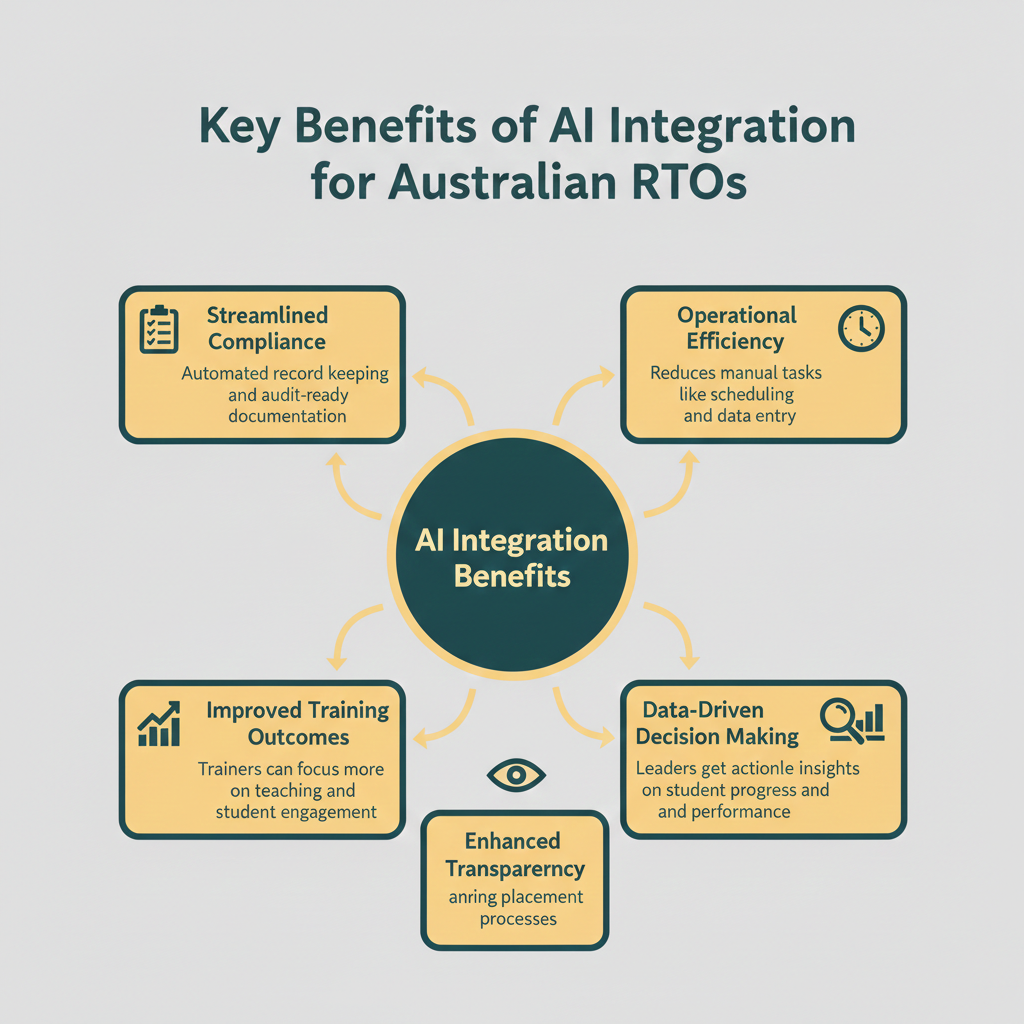
When reporting, student records and operational tracking are managed through intelligent platforms, leaders gain real time visibility into organisational performance. This improves accountability and allows faster responses to emerging challenges. It also reduces operational costs and supports a more consistent student experience, creating measurable improvements in efficiency and learner outcomes.
For many training institutes, adopting intelligent operational systems is becoming a practical requirement rather than an optional upgrade.
Common misconceptions about AI in the VET sector
One common concern is that intelligent systems will replace trainers or reduce the human element of education. In practice, these systems function as operational support tools. Trainers remain central to learning delivery, student engagement and professional judgement. Technology handles repetitive administrative tasks so educators can focus on teaching.
Another misconception is that digital integration introduces uncontrolled risk. In reality, structured implementation strengthens governance by improving audit trails, documentation accuracy and process transparency. When deployed correctly, intelligent systems increase oversight rather than reduce it.
Understanding these distinctions helps leaders approach adoption with clarity and confidence.
Aligning RTO AI compliance strategies with emerging standards
Compliance remains a core responsibility for every Australian RTO. Strong RTO AI compliance strategies support continuous alignment with regulatory expectations. As the Standards for RTOs 2025 emphasise transparency and self assurance, organisations must maintain reliable evidence of genuine learning activity.
Automated monitoring and validation tools convert compliance into an ongoing operational function. Institutions operate in a constant state of readiness instead of relying on short audit preparation cycles. This reduces administrative pressure and improves documentation accuracy.
Stable compliance processes allow quality teams to focus more on improving training delivery and learner outcomes. This balance strengthens institutional credibility with regulators and industry partners across Australia.
Future-proofing RTOs with AI for sustainable growth
Sustainable expansion requires systems that scale without increasing administrative burden. Future-proofing RTOs with AI enables organisations to streamline enrolment management, communication workflows and assessment coordination.
These efficiencies lower operational costs and improve the student journey. As routine tasks become more efficient, trainers and support staff can invest more time in instruction and learner support. This leads to stronger vocational training outcomes driven by intelligent systems while preserving educational quality.
A sustainable operating model uses technology to support human expertise rather than replace it.
AI for vocational education leadership and industry relevance
Effective AI for vocational education leadership depends on maintaining strong alignment with industry needs. Training organisations must respond quickly to workforce change and employer expectations. Access to accurate operational data allows institutions to adjust programs, update curriculum and strengthen partnerships with industry.
Through structured AI integration across the VET sector, organisations can identify emerging skills gaps and refine delivery strategies. This improves graduate employability and reinforces the provider’s reputation as a dependable training partner.
Leadership in this context is about using better information to guide decisions that benefit students, employers and the wider vocational ecosystem.
Security, governance and leadership concerns
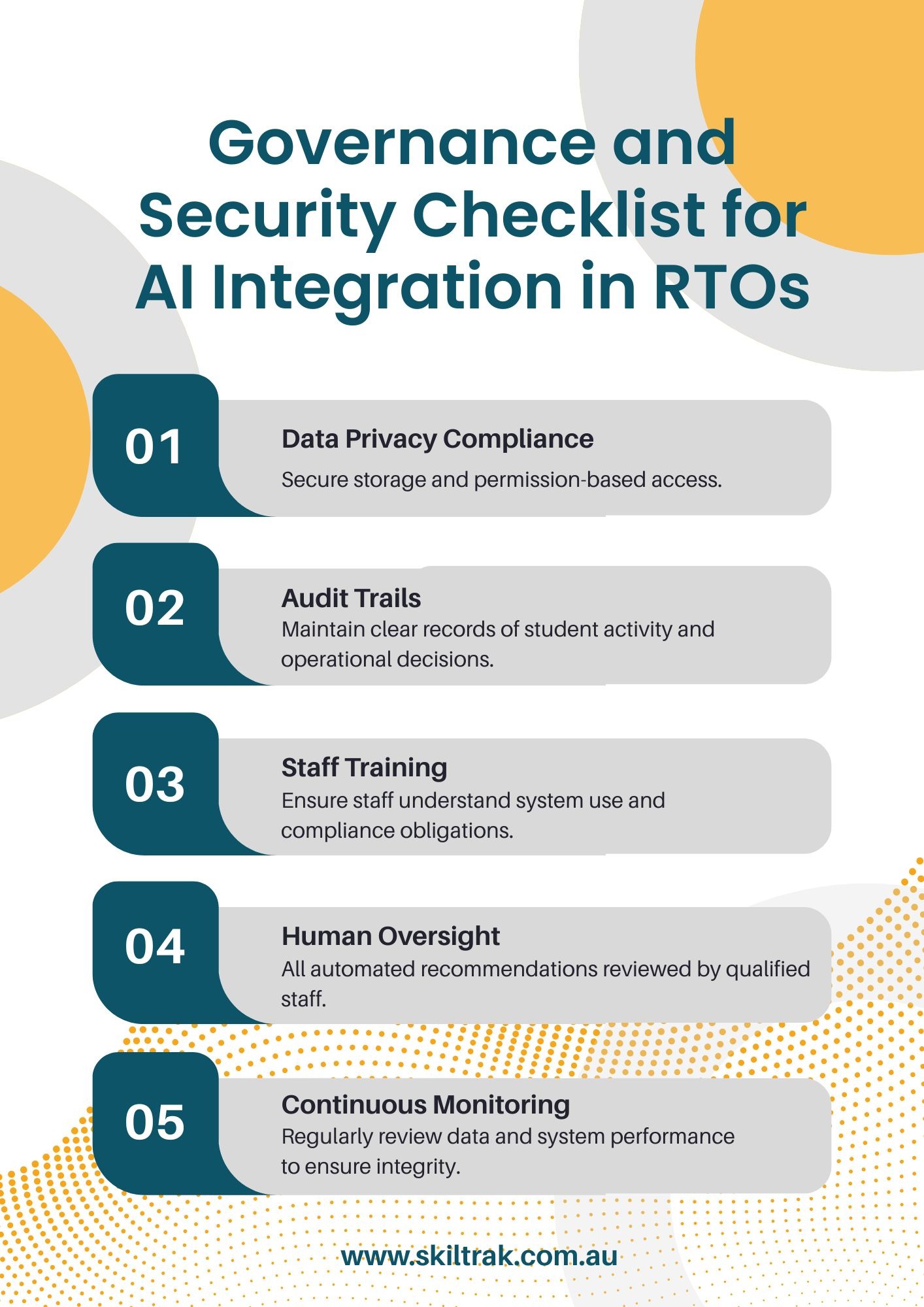
Security and risk management are central considerations for VET leaders evaluating new systems. Protecting student data, maintaining privacy and ensuring regulatory compliance are non-negotiable requirements.
Well-designed intelligent systems in vocational education include strong data protection controls, secure access management and clear audit trails. Encryption, permission-based access and compliance-aligned data storage reduce the risk of unauthorised exposure. Working with trusted technology providers that meet Australian data protection expectations further strengthens institutional safeguards.
Governance frameworks are equally important. Institutions must establish clear policies on system usage, staff training and accountability. Responsible implementation ensures that technology supports organisational objectives without compromising ethical or regulatory standards.
When security and governance are addressed from the beginning, intelligent systems become tools for strengthening trust rather than sources of risk.
A practical direction for modern Australian RTOs
The shift toward AI integration in the VET sector is a practical response to everyday operational challenges faced by training providers. Institutions that invest in structured digital infrastructure today are positioning themselves for long-term resilience. The objective is clarity, efficiency and accountability.
For modern Australian training organisations, adopting intelligent operational frameworks is a logical step toward maintaining competitiveness in a sophisticated education market. Early adopters benefit from smoother workflows, stronger compliance foundations and improved training outcomes.
With these foundations in place, the next step is selecting the right operational platform.
SkilTrak and the future of VET operations
Turning strategy into practice requires reliable operational tools. SkilTrak supports Australian RTOs in implementing effective AI integration in VET sector strategies through digital infrastructure designed specifically for vocational education.
The platform simplifies compliance management, improves operational visibility and strengthens collaboration between training providers and industry. By aligning with training organisations' AI compliance strategies and supporting future-proofing RTOs with AI, SkilTrak helps organisations operate with greater confidence and efficiency.
Its tools are built to enhance vocational training outcomes driven by intelligent systems while supporting leaders who prioritise security, quality and accountability. For providers seeking a practical framework to modernise operations, SkilTrak offers a focused solution that connects technology with real educational needs.
Share this article