Blogs & Resources

Guides, insights and compliance updates for RTOs and industry partners

What is a USI? And Its Importance in VET Australia 2026
RTOs

What is a USI? And Its Importance in VET Australia 2026

21st Jul 2026

If you are enrolling in a VET course in Australia, one of the first things your RTO will ask for is your USI (Unique Student Identifier). A lot of students have heard the term but are not entirely sure what it is, why it matters, or what happens if they do not have one. This article covers everything you need to know. What Does USI Stand For? USI stands for Unique Student Identifier. It is a reference number issued by the Australian Government to every student enrolled in nationally recognised training in Australia. Your USI gives you access to a government-authenticated record of all your vocational education and training achievements since 2015. Think of it as your personal education ID one number that follows you throughout your entire training journey in Australia, no matter how many courses you do or how many training organisations you study with. When Did the USI Start? Introduced under the Student Identifiers Act 2014, the USI became mandatory for anyone seeking a qualification or statement of attainment from a Registered Training Organisation from 1 January 2015. As of 2026, over 15.6 million USIs have been issued since inception, supporting more than 4 million annual VET students across approximately 5,000 RTOs. If you have studied any nationally recognised VET course since 2015, including while you were at school, you already have a USI. What Does a USI Actually Do? A USI does two main things. First, it creates a permanent record of every VET qualification and statement of attainment you complete in Australia. All your training history is in one place, accessible whenever you need it, whether for a job application, enrolling in another course, or proving your qualifications to an employer. Second, it connects your student loan information to your personal details and is required to access Commonwealth financial assistance. If you are applying for a VET Student Loan, you cannot access it without a USI. The USI acts as a centralised identification system, linking your nationally accredited training records. This ensures that no matter where or when you undertake training in Australia, your information is accurately recorded. Yes, without exception. Without a USI, VET students cannot receive their qualification or statements of attainment upon course completion unless a formal exemption is in place. This means if you complete your.

Student Rights During a Work Placement in Australia - Guide
Student Placement

Student Rights During a Work Placement in Australia - Guide

6th Jul 2026

For students, starting placement is one of the most exciting parts of a vocational course. But before starting, a student must understand that he has rights and protections. Even though it is not a proper employment. Knowing these rights helps the students to focus on their learning, give their best, and know exactly what to do if something does not feel right. This guide explains what rights a student has and who to report in case the rights are violated. Is Your Work Placement Legally Unpaid? Under the Fair Work Act 2009, a VET work placement is classified as a "vocational placement." This means it is lawfully unpaid, but only when all four of these conditions are met: Placement is mandatory work that students have to do, it’s not volunteer work or work that students choose to do. The course should be delivered by an institution authorised under Australian law, including all RTOs, TAFEs and training providers. There is no contract or agreement entitling students to be paid for their work. Placements are not covered by an industrial award or registered agreement. When all four conditions are met, the host employer is not required to pay the student under the Fair Work Act. Students are not considered employees during placement, meaning minimum wage rules and standard employment entitlements do not apply to placement hours. What if the conditions are not met? If the placement does not satisfy all four conditions, it no longer qualifies as a vocational placement under the Fair Work Act. At that point, it may be considered employment, meaning the host employer could be legally required to pay. Students who are unsure about their specific situation can contact the Fair Work Ombudsman at fairwork.gov.au. These Safety Rights Always Apply Even though Fair Work employment entitlements do not apply to vocational placements, Work Health and Safety rights absolutely do. The WHS Act 2011 applies to everyone in a workplace, including students on placement, with no exceptions. Meaning host employers are obliged to provide a safe environment to students: Host employers are expected to perform a risk assessment of the workplace before the students start and address any identified hazards. Students should be provided a proper induction before they begin to do any task, covering emergency procedures, safety equipment and who to contact if.

NDIS Price Guide 2026-27: What Has Changed and Why
Industries

NDIS Price Guide 2026-27: What Has Changed and Why

3rd Jul 2026

The NDIA reviews NDIS prices every year to make sure they are fair for participants and sustainable for providers. This review is called the Annual Pricing Review (APR), and it checks whether prices are up to date based on market data, research, and feedback from participants and providers. For 2026-27, the NDIA used data from over 16 million therapy transactions to make sure therapy prices reflect what is actually being charged in the real market. That is 5 million more data points than the previous year, so the changes are based on a bigger picture than ever before. The Biggest Change In Support Worker Rates The change most participants and providers will feel first is the increase in support worker pay rates. The standard weekday rate for a support worker has gone from $70.87 to $73.58 per hour, an increase of about 4.8%. This happened because the Fair Work Commission increased the minimum wage for disability support workers, and the NDIS pricing follows that increase. Here is what the new rates look like across different times and days: Weekend and public holiday rates are higher because support workers receive penalty rates under the award that covers their employment. These rates are the maximum a provider can charge, not a set amount that every provider must charge. For participants: Your plan budget is generally adjusted to keep pace with price rises, so in most cases, you will not end up with less support. If you are an agency or plan manager, your provider will update their rates from 1 July 2026. They must speak to you before changing your service agreement, and you must agree to the change. Why Some Therapy Prices Are Up and Some Down This is where the 2026 27 changes get more detailed. Not all therapy prices moved in the same direction. The NDIA compared NDIS prices against Medicare and private health insurance data to see where NDIS rates were too high or too low compared to the broader market. Psychology went up. The rate for psychologists increased from $232.99 to $252.99 per hour. This was done because NDIS rates for psychologists were lower than what psychologists earn outside the NDIS, which was making it hard for participants to find a psychologist. The increase is meant to fix that. Dietitians went down.

The NDIS: What Is It and How Does It Work in 2026
Industries

The NDIS: What Is It and How Does It Work in 2026

3rd Jul 2026

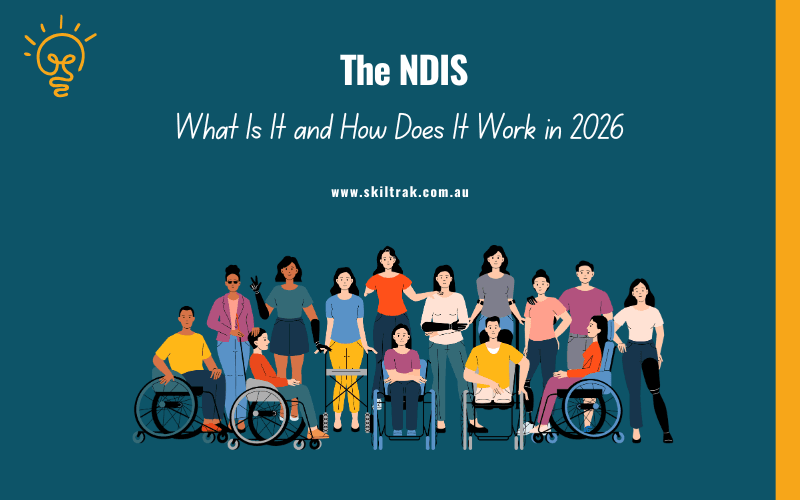
If you are a person with disability, a family member, or someone supporting a person with disability, you have probably heard about the NDIS. But understanding how it actually works, what it covers, who is eligible, and how to access it can feel confusing. In this guide, we explain the NDIS in simple, plain language with no complications. Just what you need to know. What Does NDIS Stand For? NDIS stands for the National Disability Insurance Scheme. It is an Australian Government program that provides funding to people with permanent and significant disability so they can access the support and services they need to live their lives. The scheme started rolling out in 2013 and is now one of the largest social programs in Australia. There are currently 761,442 participants on the scheme as of early 2026.  How Does the NDIS Work? The NDIS works by giving eligible people an individual funding plan, a budget that they can use to access supports and services that help them with daily life, work, community participation, and personal goals. Every person's plan is different because every person's needs are different. The amount of funding and the types of support covered depend entirely on the individual. The NDIS does not give you cash directly. Instead, your plan gives you a budget that pays for approved supports. You use that budget to access services from NDIS-registered providers or, in some cases, unregistered providers, depending on how your plan is managed. The key principle behind every funding decision is whether the support is "reasonable and necessary." Meaning the support must be directly related to your disability, represent value for money, and help you work toward your goals. Who Is Eligible for the NDIS? Not everyone with a disability qualifies for the NDIS. Eligibility is based on specific criteria. To be eligible, you need to be under 65 years of age at the time you apply. You need to be an Australian citizen, a permanent resident, or a Protected Special Category Visa (SCV) holder. And you need to have a permanent and significant disability that substantially affects your ability to take part in everyday activities. The NDIS is not means-tested your income, savings, and assets do not affect your eligibility or the amount of funding you may receive. The types of disability.

Difference Between Internship, Apprenticeship, & Vocational Placement
career goals

Difference Between Internship, Apprenticeship, & Vocational Placement

4th Jun 2026

If you've been looking around job boards for opportunities, you've probably come across these three terms more than once. Sometimes they're used interchangeably, which doesn't help anyone trying to make a real decision about their career path. They may sound like opportunities, but they are not the same and understanding the difference could save you from signing up for something that doesn't match what you're actually after. In this guide, we go through the differences between an internship, apprenticeship, and a vocational placement, and which one you should choose and why. Internships: Work Experience With Industry Exposure An internship is a short-term work placement, usually in a professional or corporate environment. It's most common among university students or recent graduates who want hands-on exposure to an industry before committing to a full-time role. Internships in Australia typically run anywhere from a few weeks to six months. Some are paid, many still aren't, which is a topic that's drawn considerable attention from the Fair Work Ombudsman in recent years, particularly around whether unpaid arrangements meet lawful employment conditions. What an intern actually does: The work varies depending on the employer, but the idea is that you're contributing to real projects while learning how the organisation operates. You might be sitting in on client meetings at a marketing agency, supporting research for ideas, or assisting a legal team with case preparation. It's largely observational and supportive at first, building toward more responsibility as the internship progresses. Who this suits: Internships fit people who are mid-study or newly graduated and want to test whether their chosen field feels right in practice. Industries like media, finance, technology, public policy, and the arts tend to rely heavily on internships as a pipeline for future talent. It is to provide hands-on experience so students can understand the work environment more thoroughly, as well as assess the students' potential for future employment. What it doesn't include: An internship is not a formal qualification pathway. You won't walk away with a nationally recognised credential. You also don't have a guaranteed job at the end, though a strong performance often opens that door. An apprenticeship is a structured employment arrangement where you train in a skilled trade while working for a registered employer. In Australia, apprenticeships are governed under the Australian Apprenticeships framework and

Infection Control Training In Australia - Guide 2026
Courses

Infection Control Training In Australia - Guide 2026

22nd May 2026

Infection control is one of the major problems in healthcare. Often time a single lapse in hand hygiene can lead to an outbreak. One improperly cleaned surface can compromise an entire ward. This is where infection control training becomes not just important, it's essential. A carer working in aged care facilities, disability services, or acute hospital settings, who understands how to prevent the spread of infections, can save lives. Healthcare-associated infections affect millions of patients worldwide each year, many of which are preventable through proper training and adherence to protocols. In this article, we understand infection control training and why it is needed in healthcare and community settings. What Is Infection Control? Infection control refers to the policies and procedures designed to minimise the risk of spreading infections, particularly in healthcare and community settings. It's about creating an environment that protects vulnerable individuals. In aged care specifically, infection control takes on heightened importance. Elderly residents often have weakened immune systems, making them particularly susceptible to infections. What might be a minor bug for a healthy adult could become life-threatening for someone in residential care. The Australian Commission on Safety and Quality in Health Care emphasises that infection prevention and control in aged care must be a top priority, especially following lessons learned from recent global health challenges. The 5 Fundamental Principles of Infection Control Every healthcare worker should understand these core principles that form the foundation of effective infection prevention: 1. Standard Precautions: Treat all blood and body fluids as potentially infectious. This means using appropriate protective equipment regardless of whether you know someone's infection status. 2. Hand Hygiene: The single most effective measure to prevent infection spread. Proper handwashing technique and knowing the five moments for hand hygiene can reduce transmission rates by up to 50%. 3. Personal Protective Equipment (PPE): Knowing when and how to use gloves, masks, gowns, and eye protection correctly. It's not just about wearing PPE; it's about using it properly to prevent any cause of infection. 4. Environmental Cleaning: Regular disinfection of surfaces and equipment using appropriate cleaning agents. High-touch surfaces need particular attention. 5. Safe Handling of Sharps and Waste. Proper disposal procedures protect both workers and the wider community from exposure to infectious materials. Getting Your Infection Control Certificate Professional certification demonstrates your commitment to safe practices.