 skills
Top In Demand Skills in Australias' Vocational Education VET in 2026
Due to the recent changes in the Australian Vocational sector, the navigation for in demand skills has been updated. A focus on practical, verified capabilities is replacing traditional emphasis on general academic credentials. In 2026, the data indicate that a significant majority of emerging roles are tied directly to vocational pathways, making hands-on education a primary driver of economic participation.
For those entering the workforce or considering a strategic career change, recognising the specific competencies currently in high demand is essential for maintaining professional relevance.
The Transition Toward Competency-Based Hiring
The current demand for specialised training is largely a response to a persistent national talent shortage. Market observations indicate that a vast majority of hiring managers across Australia are identifying critical gaps within their existing teams. As a direct result, organisations are focusing on skills-first approach, prioritising a candidate's ability to perform specific tasks, as opposed to their academic credentials. Forcasts from Jobs and Skills Australia suggest that over half of the new jobs created through 2028 will be vocational in nature.
In Demand Skills In Vocational Training
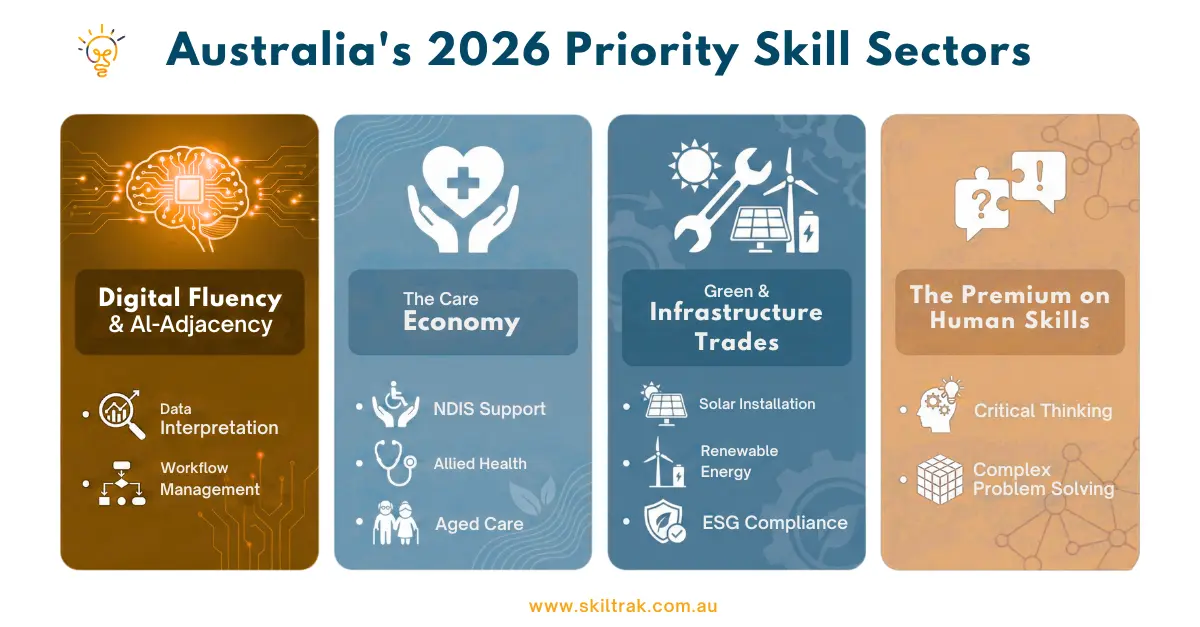
Several key industries are currently defining the demand for vocational expertise in 2026. These sectors represent the intersection of infrastructure needs, demographic shifts, and technological integration.
Digital Literacy and Technological Integration
Australia is currently facing a requirement for hundreds of thousands of new digital workers. While high-level engineering roles remain important, there is a critical need for people who have the skills to interpret how to manage digital workflows and interpret the results of automated systems. In this area, success requires the ability to bridge the gap between technology and real-world outcomes.
The Care Economy and Allied Health
With the aging population and the continued expansion of the National Disability Insurance Scheme (NDIS), healthcare remains to be the foundation of job security and one of the highly in demand skill. Aged care, disability support, and nursing have the highest number of job vacancies. To assist this essential area, the 2026 Commonwealth Practical Placement payment now offers financial support to eligible students, making it simpler to offset the costs of mandatory practical placement hours.
Infrastructure and Sustainable Trades
The construction industry is currently facing a period of significant growth. Forcast suggest that thousands of new workers are required to meet infrastructure demands, particularly in the area of specialised trades. At the same time, the transition to renewable energy has accelerated the demand for green skills. Professionals with expertise in solar installation and renewable energy systems are now prioritised on national skill lists, reflecting their importance to the country’s energy transition.
Human Centred Capabilities and Governance
As more routine work is being automated, the unique capabilities of human beings are in high demand in the market. Capabilities such as critical thinking, complex problem-solving, and communication are being seen as essential by employers. Moreover, with the advent of the mandatory Environmental, Social, and Governance (ESG) reporting regulations in 2026, there is a new need for experts who can authenticate sustainability data and supply chain resilience.
Facilitating Career Transitioning to In Demand Skills
Successfully moving from training to professional employment relies heavily on the quality of industry connections. The transition is most effective when a learner's specific competencies are matched with the precise needs of an employer. Platforms like SkilTrak support this process by providing a secure framework for managing placements and compliance.
By utilising advanced verification and matching algorithms, these systems ensure that a student’s assessed capabilities match the current needs of the labour market. The use of real-time dashboards and automated documentation enables a smooth exchange of information between training bodies and industry partners. This level of transparency ensures that students are placed in areas of greatest need for their capabilities, while also enabling the strict requirements of the 2026 regulatory framework.
Evaluating the Return on Vocational Investment
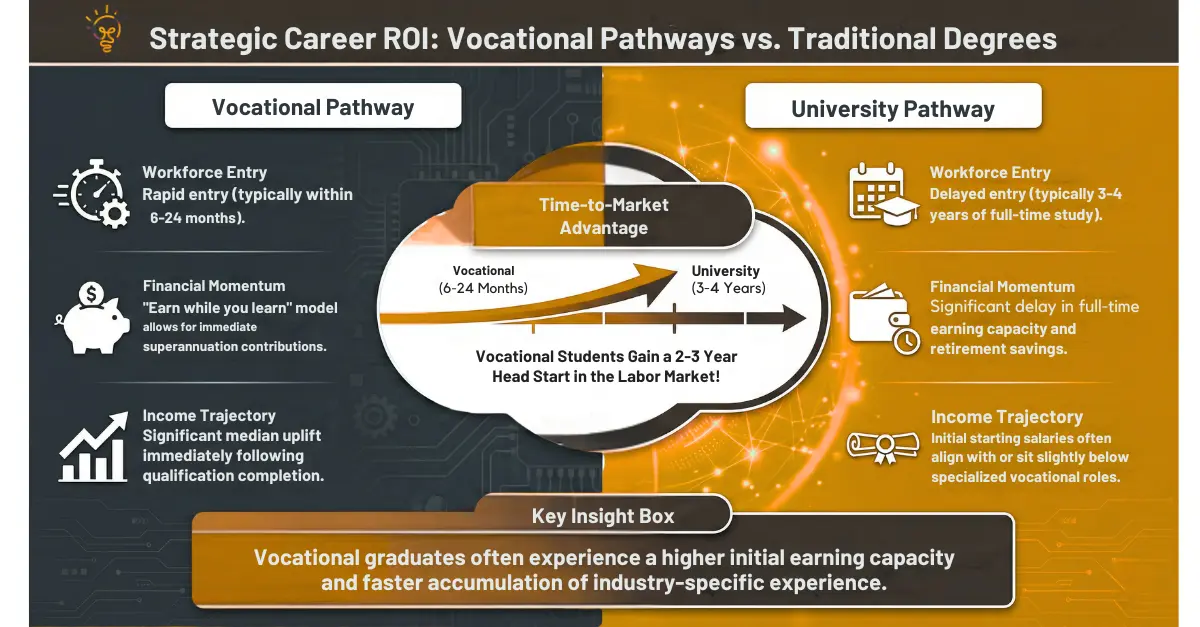
The historical assumption that university pathways provide a superior financial return is being reconsidered in light of current market data. Many vocational graduates now enter the workforce with initial earning capacities that are comparable to, or exceed, those of their university peers.
The apprenticeship model, which allows for earning while learning, provides a significant advantage by enabling early entry into the workforce and the commencement of superannuation contributions. In demand skill sectors such as mining, infrastructure, and specialised energy trades, experienced professionals frequently secure salaries that reflect the critical nature of their technical expertise.
Conclusion
The Australian workforce in 2026 values adaptability and the ongoing development of practical skills. By targeting in deamnd skils such as the care economy, digital infrastructure, and sustainable trades, and using professional job placement websites to bridge the gap between education and employment, individuals can develop a strong and protected career trajectory.
Share this article