 Industries
How Industries Can Turn Vocational Educational (VET) Placements into Revenue
In the Australian Vocational Education and Training (VET) sector, the relationship between training providers and industry has always been one-sided. Assuming that the industry provides the practical venue, and the training organisation provides the student.
While the long term benefit for industry is the potential to recruit new staff, the immediate reality often involves high operational costs. Hosting students requires supervision, administration, and resource allocation. For many businesses, whether in aged care, construction, or early childhood, this creates a financial imbalance.
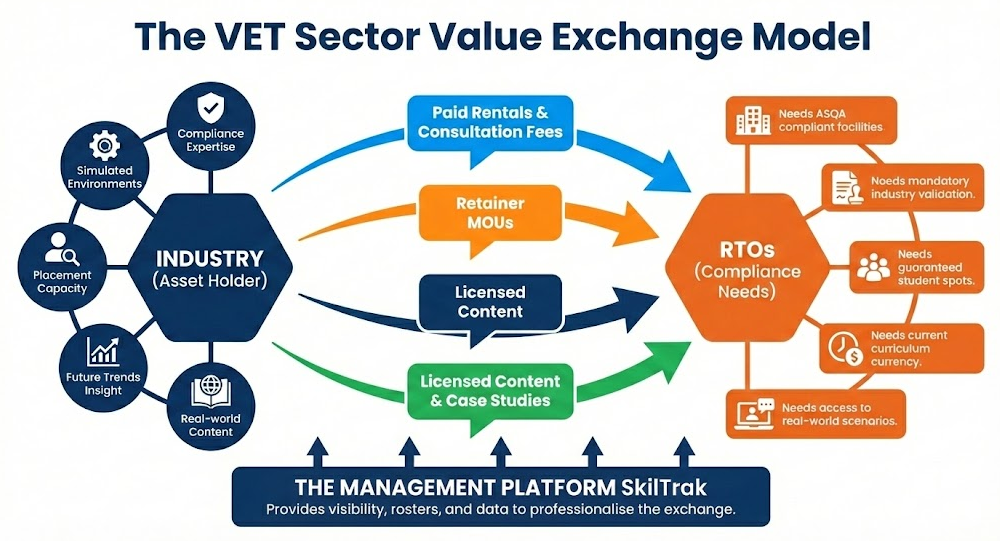
However, this perspective overlooks a critical fact: Industry holds the exact assets that training organisations require to operate. National standards require training providers to have access to real workplaces and industry expertise in order to operate.
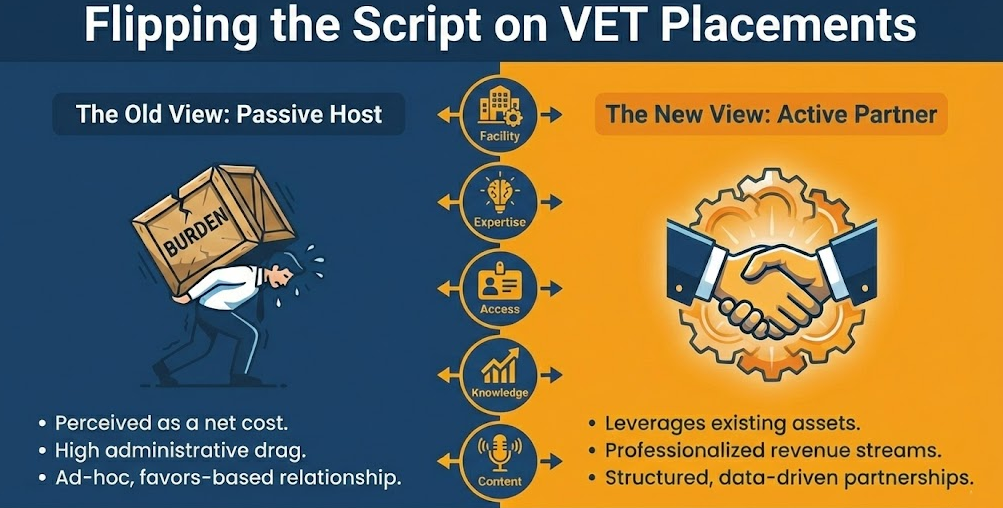
By recognising the value of their existing infrastructure and knowledge, business owners and facility managers can shift the industry’s role from passive host to active partner, creating new value from current operations.
Simulated Work Environments
A major challenge for many smaller or online-based training institutes is access to high-quality facilities. Training packages often require students to demonstrate skills in a simulated work environment before they are permitted to work with real clients or patients.
Building these facilities from scratch is expensive for a training provider. However, industry partners often have these environments (simulation labs) available.
Aged Care: Facilities may have unoccupied rooms or training wings with standard hospital beds and equipment.
Trade & Construction: Workshops often have designated bays or machinery that are not in constant use.
The Opportunity
There is a clear demand for high-quality practical spaces. Industries can explore arrangements where these spaces are made available to training organisations for intensive practical training blocks. This allows the training organisations to meet their facility requirements without capital investment, while the industry partner utilises dormant space.
SkilTrak’s Role
Managing external access requires oversight. SkilTrak provides a centralised roster system, allowing facilities to track exactly when training institutes staff and students are on-site, ensuring safety and visibility without the administrative confusion.
Formalising Consultation
Training organisations are required to engage with industry to ensure their training remains current. This industry consultation is a compulsory part of their compliance. They must demonstrate that their learning materials, tools, and assessment strategies align with current workplace practices.
Frequently, training institutes seek this feedback through informal channels or quick conversations. However, the insight provided by industry veterans regarding workflow, new technology, and safety standards is valuable intellectual property.
The Opportunity
Industries can look at formalising this feedback loop. Rather than viewing consultation as a favour, businesses & facilities can position it as a professional service. Through structured reviews of training materials, industry experts can ensure relevance while having their time and expertise formally recognised and valued.
Conditional Memorandums of Understanding (MOUs)
For training providers, finding enough placement spots for their students is often their biggest operational headache. Without a guaranteed host, they cannot enrol or graduate students. Access to a functioning workplace is a scarce resource.
The Opportunity
This shortage provides an opportunity for the industry to formalise its engagement with RTOs through Memorandums of Understanding (MOUs). A structured MOU replaces informal practices by clearly outlining expectations for student placement capacity, supervision standards, and facility resources.
Formal agreements allow industry to set higher standards for the students they accept and can provide a framework for discussing commercial terms or resource sharing that benefits both parties.
SkilTrak’s Role
SkilTrak allows the training organisations to link with Industries. Once the nature of the partnership and any agreements are managed exclusively by the organisations themselves.
Seminars and Future Trends
Slow curriculum updates in vocational education can create a disconnect, leaving graduates well-versed in theory but unfamiliar with modern industry trends like manufacturing automation and digital health records in aged care.
The Opportunity
Industry leaders are usually the earliest to identify change, and businesses can use this insight to support RTOs through seminars, guest lectures, or workshops. Giving students firsthand exposure to future work trends adds strong value to their training and strengthens the business’s innovative reputation.
Industry Led Insights
Training providers need engaging content to keep students motivated and retention rates strong, with real world examples, case studies, and practical ethics discussions often resonating more than textbooks.
The Opportunity
By capturing senior staff knowledge through podcasts or recorded interviews, industries can help connect classroom learning with workplace realities. Sharing this content with training organisations enhances course delivery through authentic industry insight and reinforces the business’s authority.
Rebalancing the Partnership
The engagement between industry and the VET sector must evolve beyond a transactional dependency.
By recognising the assets they already possess, such as knowledge, access, and authority, businesses can reshape their relationship with training providers. Adapting to a more structured, professional partnership helps ensure that the costs of hosting placements are offset by the value generated.
SkilTrak support this shift by providing the management layer needed to professionalise these interactions, assisting that every placement, consultation, and facility use is tracked, visible, and managed effectively.
Share this article
FAQ's
01
Can industry charge training organisations for vocational placements?
Not directly, but Industries can monetise the professional services surrounding the placement. RTOs require access to simulated work environments and industry expertise to meet their ASQA compliance obligations. Businesses can charge fees for facility rentals, formal industry consultation, and structured Memorandums of Understanding (MOUs) that guarantee placement capacity, rather than charging for the student's presence itself.
02
Why do RTOs need to consult with industry?
Under the national VET Quality Framework, specifically the newly revised Standards for RTOs 2025, training providers are legally instructed to engage with industry. This ensures that the training delivered is current and relevant to the workplace. RTOs must demonstrate genuine industry engagement to auditors, proving that their learning materials and assessment tools validate current industry practices and future trends.
03
What assets can an aged care or construction facility monetise in the VET sector?
Facilities in sectors like aged care or construction hold significant assets required for vocational training. These include underutilised space suitable for simulated assessment centres, the intellectual property of senior staff for validation of training materials, and access to a live workforce pipeline for student placements. Packaging these as professional services allows facilities to generate revenue from existing operational infrastructure.
04
How does formalising a relationship with an RTO benefit an industry employer?
Moving from improvised arrangements to a formal service level agreement or MOU professionalises the relationship. It allows the industry employer to set clear standards for student intake, reduce administrative chaos through agreed protocols, and potentially secure retainer fees for guaranteed access. It shifts the dynamic from a passive favour to a strategic, manageable business partnership.
05
What is the role of digital platforms in managing VET industry partnerships?
Digital platforms like SkilTrak are essential for managing the complexity of professionalised training organisations partnerships. They provide necessary operational visibility by centralising rosters for simulated labs, tracking compliance documents for incoming personnel, and providing data driven reporting on MOU deliverables. This infrastructure turns chaotic administrative burden into a manageable, auditable process.