 Industries
The NDIS: What Is It and How Does It Work in 2026
If you are a person with disability, a family member, or someone supporting a person with disability, you have probably heard about the NDIS. But understanding how it actually works, what it covers, who is eligible, and how to access it can feel confusing.
In this guide, we explain the NDIS in simple, plain language with no complications. Just what you need to know.
What Does NDIS Stand For?
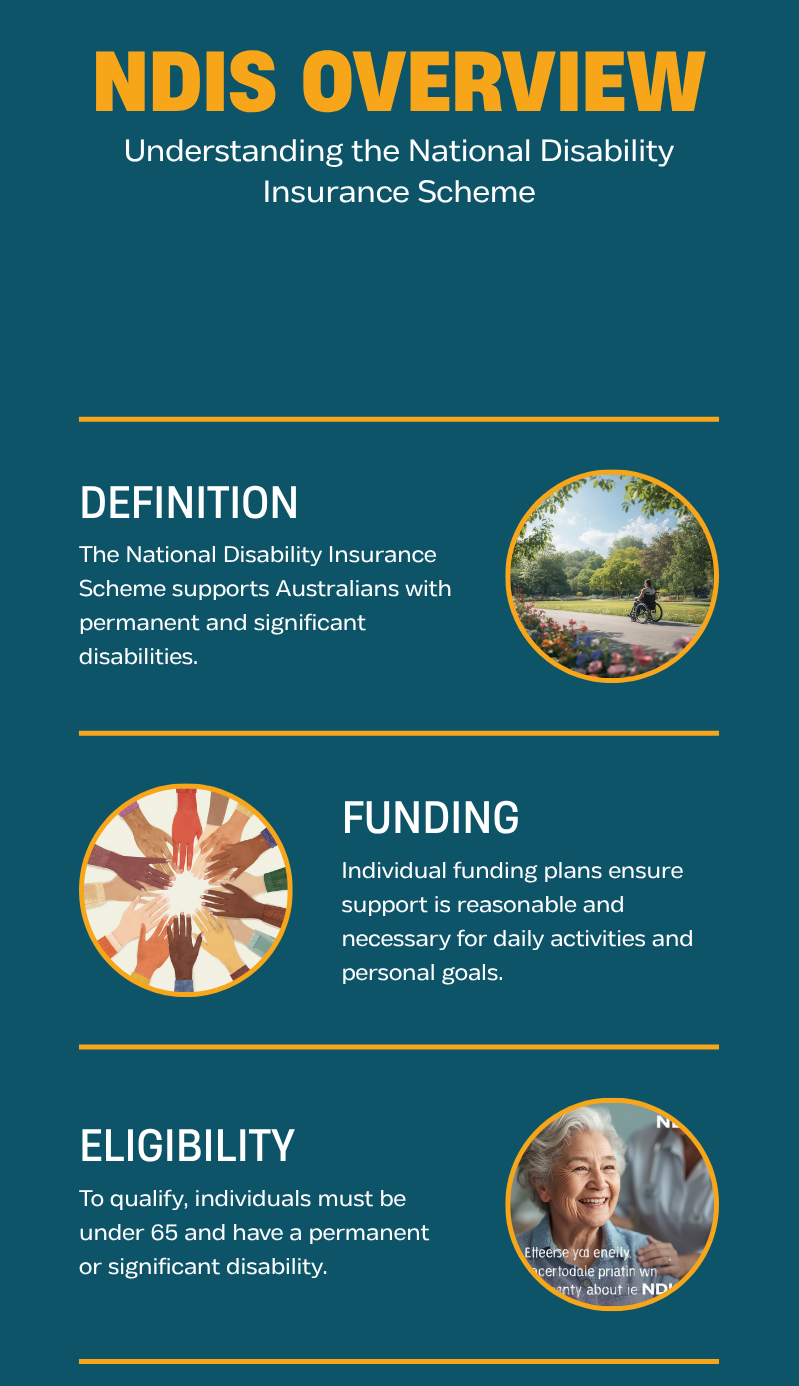
NDIS stands for the National Disability Insurance Scheme. It is an Australian Government program that provides funding to people with permanent and significant disability so they can access the support and services they need to live their lives.
The scheme started rolling out in 2013 and is now one of the largest social programs in Australia. There are currently 761,442 participants on the scheme as of early 2026.
How Does the NDIS Work?
The NDIS works by giving eligible people an individual funding plan, a budget that they can use to access supports and services that help them with daily life, work, community participation, and personal goals.
Every person's plan is different because every person's needs are different. The amount of funding and the types of support covered depend entirely on the individual.
The NDIS does not give you cash directly. Instead, your plan gives you a budget that pays for approved supports. You use that budget to access services from NDIS-registered providers or, in some cases, unregistered providers, depending on how your plan is managed.
The key principle behind every funding decision is whether the support is "reasonable and necessary." Meaning the support must be directly related to your disability, represent value for money, and help you work toward your goals.
Who Is Eligible for the NDIS?
Not everyone with a disability qualifies for the NDIS. Eligibility is based on specific criteria.
To be eligible, you need to be under 65 years of age at the time you apply. You need to be an Australian citizen, a permanent resident, or a Protected Special Category Visa (SCV) holder. And you need to have a permanent and significant disability that substantially affects your ability to take part in everyday activities.
The NDIS is not means-tested your income, savings, and assets do not affect your eligibility or the amount of funding you may receive.
The types of disability the NDIS covers include physical impairments affecting mobility and motor function, intellectual impairments affecting cognitive abilities, autism, psychosocial disabilities related to mental health conditions, neurological conditions, hearing impairments, and visual impairments.
This is not a complete list. The NDIA assesses each application based on the functional impact of the disability on that person's daily life.
What about children?
Children under 9 with developmental concerns or a diagnosed disability can access support through the NDIS Early Childhood Approach. Children under 6 can access this support without needing a formal diagnosis.
What if you do not qualify?
The NDIS was never designed to support every Australian with a disability. If you do not meet the eligibility criteria, there are other community and mainstream supports available. A Local Area Coordinator (LAC) can help you understand what other options exist in your area at no cost. National Disability Insurance Scheme
How Do You Apply for the NDIS?
Applying for the NDIS involves a few steps and takes some preparation, particularly around gathering evidence of your disability.
Step 1 — Check your eligibility. Before applying, confirm you meet the age, residency, and disability criteria outlined above. You can use the eligibility checker on the NDIS website at ndis.gov.au.
Step 2 — Gather supporting evidence. You will need documentation from your treating health professionals, your GP, specialist, or allied health professional that explains your disability, its permanence, and how it affects your daily life. The stronger your evidence, the smoother your application process.
Step 3 — Submit your access request. You can submit your access request online through the NDIS website or by calling 1800 800 110. You must be younger than 65 on the day you make your NDIS application. Your application needs to be complete and received before you turn 65. National Disability Insurance Scheme
Step 4 — Planning meeting. If your access request is approved, you will have a planning conversation with an NDIA representative. This is where you discuss your goals, your current supports, and what you need help with. Your NDIS plan is built from this conversation.
Step 5 — Start accessing supports. Once your plan is approved, you can start using your funding to access services from NDIS providers.
How Much Funding Does the NDIS Provide?
There is no standard amount every plan is different because every person's needs are different.
The average plan budget is currently around $31,000, though the government is working to bring this back toward the 2023 average of $26,000 as part of the 2026 reforms.
Your funding is divided into different support categories, things like daily activities, community participation, health and wellbeing, and capacity building. The amount in each category reflects what was discussed in your planning meeting and what the NDIA considers reasonable and necessary for your situation.
How Is NDIS Funding Managed?
Once you have a plan, you choose how your funding is managed. There are three options.
Agency-managed: The NDIA pays your providers directly on your behalf. This is the simplest option and requires the least admin from you, but you can only use registered NDIS providers.
Plan-managed: A plan manager handles the financial side for you, paying providers and managing your budget. You get more flexibility because you can use both registered and unregistered providers, without having to handle the money yourself.
Self-managed: You receive the funding directly and pay providers yourself, keeping your own records. This gives you the most flexibility and control, but also the most responsibility.
There is no right or wrong choice it depends on how much control you want and how comfortable you are managing finances.
What Are NDIS Providers and How Do You Find One?
NDIS providers are organisations or individuals that deliver supports and services to NDIS participants. They can provide personal care, therapy, community access support, accommodation support, assistive technology, and much more.
To find a provider, you can use the Provider Finder tool on the NDIS website, ask your support coordinator for recommendations, or get advice from other participants and local community networks.
What Is Changing in 2026?
The NDIS is going through its biggest changes since it launched in 2013. It is important to know about these if you are a current participant or are thinking about applying.
On 22 April 2026, Minister Mark Butler announced a major reform package built on four pillars: fighting fraud, slowing cost growth, clearer eligibility requirements, and improving service quality.
Here is what is actually changing and when.
- Community participation funding is being reduced from 1 October 2026. Funding for social and community participation will be reset. The average participant's spending in this category will come down from around $31,000 to $26,000 over the next two years, returning to roughly 2023 levels. This is the change current participants will feel first.
- Eligibility is moving from diagnosis-based to functional capacity-based. The NDIS is focusing on the mobility and function of the disabled person. What counts is how your disability affects your daily life, communication, mobility, personal care, community participation, work, and relationships. This will be assessed using a standardised tool called the I-CAN v6.
- New eligibility boundaries apply to new applicants from 1 January 2028. Current participants will be reassessed over a transition period. This will not happen immediately. Many changes are years away, and the government has committed to consulting the disability community throughout the process.
- If you are a current participant: Your existing plan continues until you are personally notified of any change. There is no need for panic, as most participants will not see any immediate changes to their core support.
Question | Answer |
|---|---|
What does NDIS stand for? | National Disability Insurance Scheme |
Who runs it? | The National Disability Insurance Agency (NDIA) |
Who can apply? | Australians under 65 with permanent and significant disability |
Is it a means test? | No, income and assets do not affect eligibility |
How do you apply? | Call 1800 800 110 or apply online at ndis.gov.au |
How much funding? | The average currently varies around $26,000–$31,000 |
When are the 2026 changes starting? | October 2026 for community participation funding |
Conclusion:
These changes affect different people in different ways. Providers need to adjust how they bill and how they register. For participants and families, most of this happens in the background your support continues, and your plan adjusts to the new rates.
NDIS was never just about identifying a disability it is about understanding how that disability affects a person's daily life and giving them the support to live independently. Prices will keep changing every year, but the purpose behind NDIS stays the same. People with disability deserve to live with respect and dignity, and this funding is what makes that independence possible.
Share this article
FAQ's
01
Can I apply for the NDIS if I am over 65?
No. You must apply before your 65th birthday. If you are already an NDIS participant when you turn 65, you can choose to stay on the NDIS or transition to aged care services. If you are 65 or older and new to disability support, My Aged Care is the relevant program.
02
Does the NDIS cover mental health conditions?
Yes, the NDIS covers psychosocial disabilities related to mental health conditions, provided the disability is permanent and significantly affects daily functioning.
03
Will the 2026 reforms affect my current NDIS plan?
Most current participants will not lose their plans immediately. Eligibility changes apply primarily to new entrants from 2027–2028. Existing participants will be reassessed at their normal plan review. The change most likely to affect current participants sooner is the reduction in community participation funding beginning in October 2026.
04
What is a Local Area Coordinator (LAC)?
An LAC is an NDIS partner who can help you understand the scheme, check your eligibility, and prepare for your planning meeting, all at no cost to you. They are a good first point of contact if you are new to the NDIS.
05
What if I do not agree with my NDIS plan decision?
You have the right to request an internal review of any NDIS decision. If you are still not satisfied after the internal review, you can apply to the Administrative Appeals Tribunal. A disability advocate or support coordinator can help you through this process.