 career goals
Disability Support Worker: Course and Career Opportunities
The term Disability Support Worker brings to mind a worker who simply serves individuals with disabilities. While it’s true, the reality is far more meaningful. A Disability Support Worker assist individuals to live their lives with dignity and confidence. Their role is the backbone of Australia’s disability care system, making a real difference in the lives of countless individuals every single day. This career offers steady work and genuine rewards. Australia needs more people in disability support jobs right now than ever.
In this article, we walk you through the training, pay and jobs as a worker, whether it's the right path for you to choose.
Why People Choose Disability Support Worker Roles
Disability Support Workers help with everyday things, cooking, getting to appointments, personal care, or just having a chat and getting out in the community. The work feels worthwhile because you see the difference you make. With the NDIS growing and more older Australians needing support, disability support jobs stay in demand across cities and regional areas too.
You don't need years of study to start. Most roles ask for Certificate III level training, which takes 6-12 months. The hours work well for parents or people wanting a second career. Many start casual and move into full-time work pretty quickly.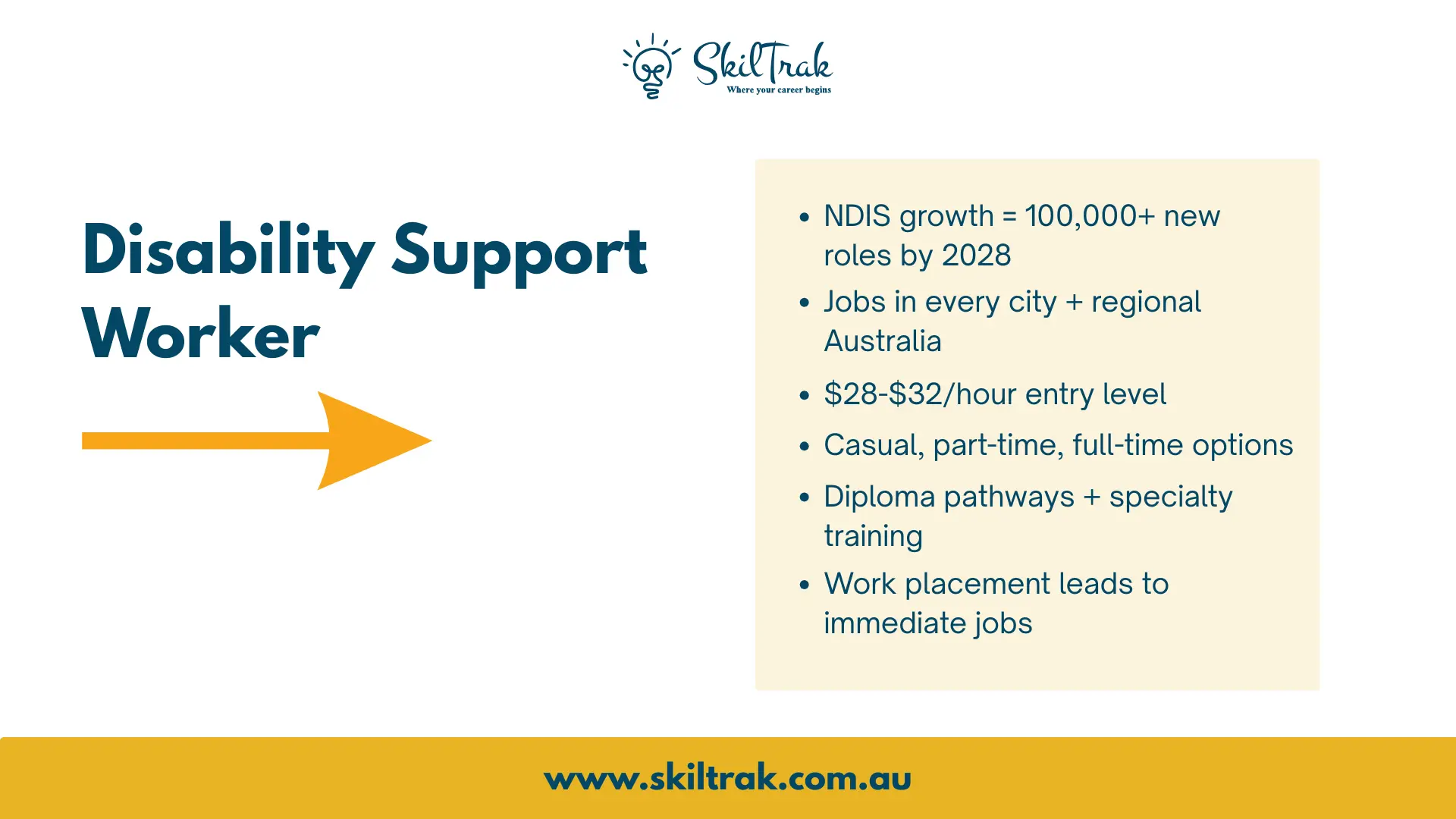
Disability Support Worker Course Basics
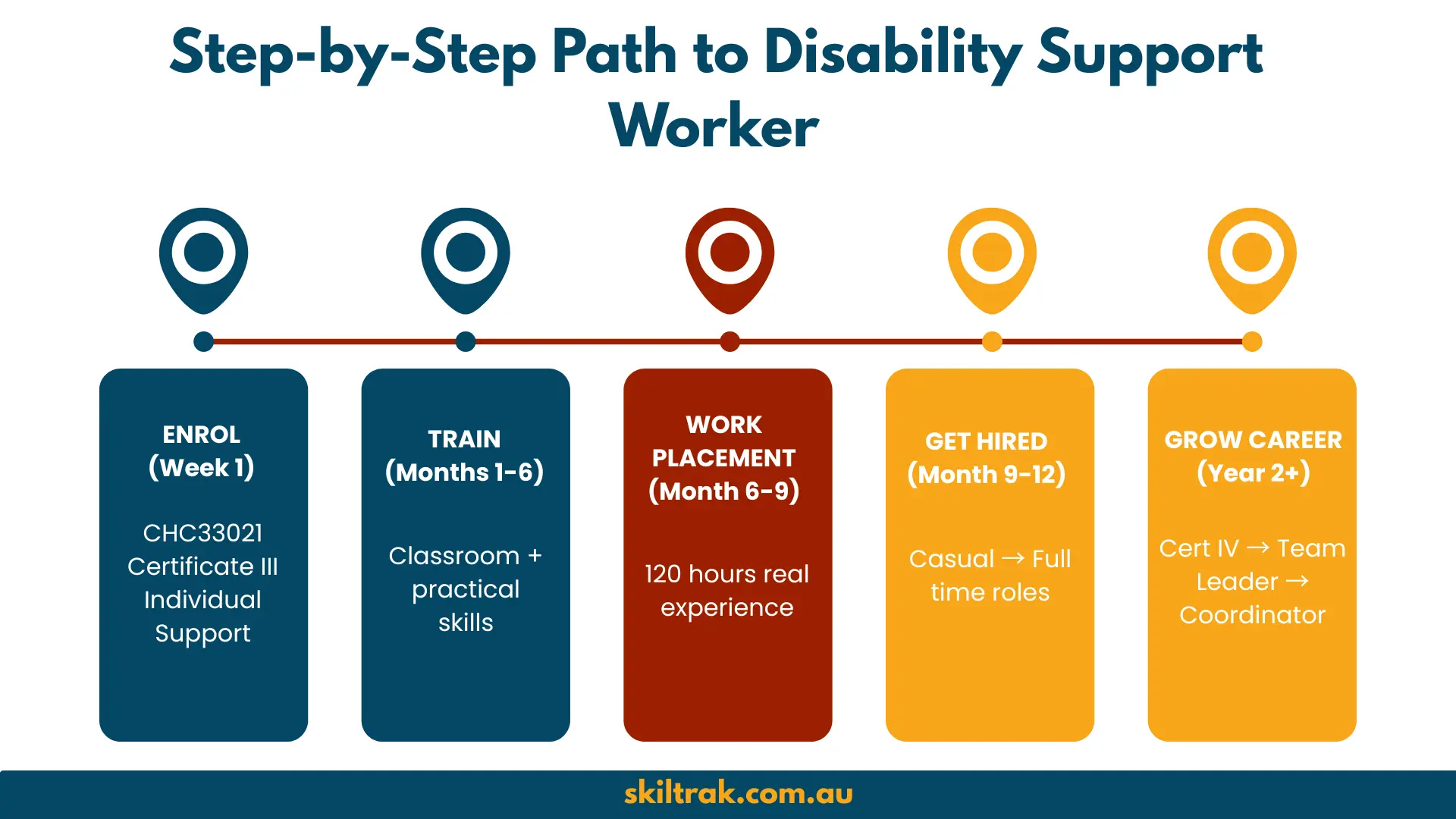
Starting with Certificate III in Individual Support (Disability). You'll learn practical skills like helping people move safely, understanding support plans, and building good relationships. RTOs and TAFEs run these courses because of the increasing demand in the sector.
Classes mix theory with hands on practice. You'll study how the body works, infection control, and legal basics around disability care. Most courses finish with 120 hours of work placement, which is where you really learn the job and meet potential employers. Placement providers play an important role in your career and securing your desired job.
What Disability Support Worker Course Covers
Core topics include daily support tasks, understanding different disabilities, and working with support plans. You'll practice communication skills for when someone can't speak easily or gets frustrated. Electives let you focus on areas like community access or complex needs.
Work placement makes the biggest difference. You'll spend time in group homes, day programs, or someone's house. Course providers usually arrange this, but you can suggest places you know. Good placement often turns into a job offer right away.
Disability Support Worker Salary Reality
Entry-level pay sits at $28-$32 per hour. Casual shifts with weekends or evenings jump to $35-$40 per hour. Full-time workers earn $55,000-$65,000 a year. After a Certificate IV or a couple of years' experience, expect $65,000-$75,000.
Regional jobs pay better to attract staff. Sleepover shifts add $200-300 per night. NDIS providers offer regular hours. Team leader roles top $85,000 once you build skills and take on more responsibility.
Where Disability Support Jobs Actually Exist
‘Check Seek’ and ‘Indeed daily’ post hundreds of disability support jobs regularly. NDIS providers like ‘Life Without Barriers’ and ‘Aruma’ list openings on their websites. Community centres and local councils hire too. Many jobs come through word of mouth or work placement connections.
Facebook groups for support workers share unadvertised casual work. Attend local care sector meetups. Once employers meet you during placement, they often call first when shifts open up.
Why Disability Support Work Placement Matters
Placement lets you get to the practical work in a proper environment before committing long-term. You'll handle real situations, helping with showers, managing behaviours, and filling out daily reports. Agencies watch how you work and offer jobs to people they like. Students often finish on Friday and start paid shifts on Monday.
You learn what you enjoy most. Some prefer one-on-one home care, others like the bustle of day programs. References from placement supervisors help land your first paid role. This experience beats classroom learning every time.
Growing Your Disability Support Worker Career
After Certificate III, consider CHC52021 Diploma of Community Services for coordinator jobs around $80,000-$95,000. CHC53415 Diploma of Leisure and Health opens lifestyle and recreation roles. Team leaders need 2-3 years of experience plus short leadership courses.
Specialty training in dementia, autism, or mental health boosts options. Some move into NDIS plan management or quality checking. Registered providers offer internal courses. Long-term careers include training new workers or running small teams.
Real Talk About Disability Support Work
Expect physical work, lifting, walking, and long hours on your feet. Some clients have behaviours that test your patience. The emotional side affects you, too. Good employers provide training and support to handle tough situations.
What keeps people in the job? Seeing clients smile, hit milestones, and trust you like family. Flexible hours fit around life. Regular training keeps work interesting. Good boundaries prevent burnout. Most say the positives outweigh the challenges when the fit feels right.
Your Next Steps To Disability Support Worker
Find a local RTO with strong placement connections. Ask about funding through Smart and Skilled or user choice training. Complete your police check and working with children check early. Start classes and use placement to build contacts.
SkilTrak
SkilTrak is a placement platform offering vetted placement opportunities. Where coordinators are available for you to answer all your queries and find a workplace that meets your desired criteria, where you will gain hands-on experience necessary for course completion, and all your experiences will be documented in your resume.
Skiltrak offers a talent pool where industries are looking for qualified support workers they can hire.
Final Thoughts
Support Worker roles offer consistent work opportunities with strong job security and career growth. Disability Support worker course delivers practical training through a practical placement with competitive salary rewards commitement. Whether you are seeking flexible working hours or a career making a genuine impact, disability support jobs are for you to apply.
Contact skiltrakmarketing@skiltrak.com.au to get your desired placement.
Share this article
FAQ's
01
How much does a Disability Support Worker Course cost?
Expect $2,000-$5,000 total. Government funding through Smart and Skilled or state training programs reduces costs to $0-$2,000 for eligible students. Private RTOs offer payment plans of around $150-$300/month.
02
What does Disability Support Worker salary look like?
Entry-level full-time earns $55,000-$65,000/year ($28-$32/hour). Casual rates hit $35-$42/hour with weekend loadings. Experienced workers with Cert IV make $65k-$75k. Team leaders reach $85k+ annually.
03
Do I need prior experience for disability support jobs?
No experience needed for entry-level roles. Course work placement provides the required 120 hours. Employers hire graduates directly from placement. Casual work builds experience for permanent positions.
04
Do I need special checks to work as Disability Support Worker?
Yes, National Police Check, Working with Children Check, and NDIS Worker Screening (free for registered providers). First Aid/CPR certificate recommended. Providers assist with application processes.