 career goals
Allied Health Assistant - Role and Jobs in 2026
Allied Health Assistants are essential to the health sector. They work alongside physios, occupational therapists, and speech pathologists. They handle practical tasks that keep patient care on track. These roles exist in hospitals, private practices, aged care, and community settings across Australia. In the current market, the demand for Allied Health Assistants is at a peak because of the aged care shortage and NDIS expansion.
In this article, we explore the current demand in the Australian market for Allied Health roles and jobs.
Typical Tasks for Allied Health Assistant
A standard shift starts with checking patient notes and preparing equipment. In physiotherapy, this involves setting up gym stations and guiding patients through exercises like leg stretches or balance work. For occupational therapy, tasks include arranging kitchen tools for skill practice, such as cutting vegetables or using utensils.
Speech assistance covers preparing communication boards or leading basic conversation groups. Afternoon work often shifts to group sessions, like pool exercises or activity classes in aged care. Staff record progress, note any issues, and report to senior therapists. They do not diagnose or create treatment plans.
Locations vary. Public hospitals use casual staff for pool cover. Private clinics manage NDIS home visits. Regional centres combine therapy with community health. The work requires some physical effort, like assisting with mobility aids, but training covers safe methods.
Availability of Allied Health Assistant Jobs
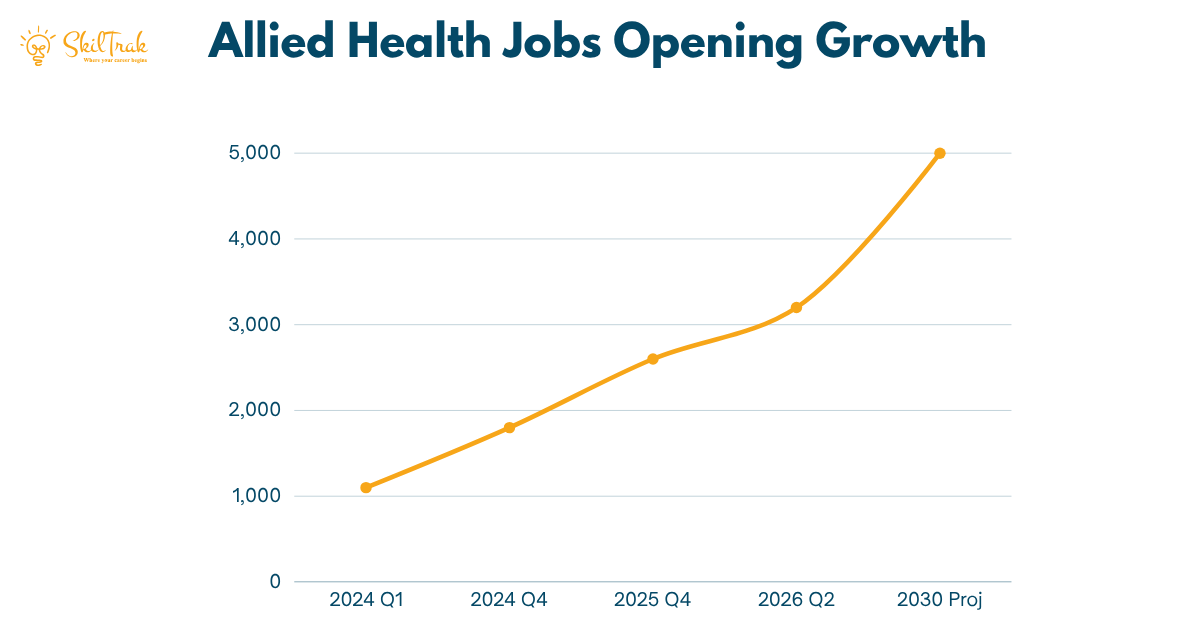
The healthcare sector employs over 16% of the Australian workforce, with allied health making up a significant portion. Allied Health Assistant jobs are expected to see about 15% growth through 2030. NDIS providers account for many community-based positions, while hospitals remain the largest employer.
Major cities like Sydney and Melbourne have regular openings at places such as Prince of Wales Hospital or Royal Melbourne Hospital. Regional areas, including Bendigo, Darwin, and rural Queensland, offer relocation incentives. Aged care facilities like Bupa hire for group programs. Agencies such as Healthcare Australia provide temporary placements.
Seek and LinkedIn typically show over 1,000 Allied Health Assistant jobs at any time. Casual positions in hospital pools often lead to permanent roles. Shortages in rural areas create quicker entry points.
Required Qualifications and Allied Health Assistant Courses
The standard entry qualification is Certificate III in Allied Health Assistance (HLT33021). TAFE providers and registered training organisations offer this course part-time over 6-12 months. It includes online theory and at least 120 hours of supervised placement. Content covers workplace safety, client observation, and support for therapy delivery in areas like physiotherapy, occupational therapy, speech, and nutrition.
Costs range from $3,000 to $6,500, with subsidies available through state jobs programs. Certificate IV in Allied Health Assistance (HLT43021) provides specialisation options, such as physiotherapy assistance or community rehabilitation. It builds skills in group facilitation and basic supervision. Recognition of prior learning reduces time for those with relevant experience.
Entry requirements include a police check, vaccinations, and Year 12 equivalent or access training. Placements often result in references that help secure Allied Health Assistant jobs.
Allied Health Assistant Salary Details
Allied Health Assistant salary starts at $60,000-$70,000 full-time for Certificate III holders, or $28-$35 per hour. Certificate IV roles reach $70,000-$85,000, particularly with supervisory duties. Senior positions exceed $85,000 in regional or specialised settings.
Public employment follows state awards, such as the NSW Allied Health Assistants (State) Award, with scales from AHA1 at around $55,000 to AHA5 at $80,000. Private sector roles fall under the Health Professionals and Support Services Award (MA000027).
Experience Level | Hourly Rate | Annual Full-Time |
Certificate III Entry | $28-$35 | $60,000-$70,000 |
Certificate IV | $32-$38 | $70,000-$85,000 |
Senior | $38+ | $85,000+ |
Additional payments include weekend penalties at 50-75%, casual loading of 25%, and rural allowances from $5,000-$20,000. Superannuation sits at 11.5%. Annual adjustments typically add 3-4%.
Conditions Under Allied Health Assistant Awards
Allied Health Assistant awards establish standard terms: 38-hour weeks, 4-5 weeks annual leave, and 10 personal leave days. Overtime pays 150% for initial hours and 200% thereafter. Long service leave provides 8.7 weeks after 10 years.
Unions negotiate updates, such as allowances for telehealth work. The Fair Work system handles disputes. Enterprise agreements in private NDIS organisations may vary slightly.
Career Fit and Next Steps
The role requires organisation for scheduling and record-keeping. Tolerance for physical tasks like patient transfers comes with training. Backgrounds in care or retail provide transferable skills.
Progression moves from Certificate III entry to Certificate IV supervision, then diplomas or enrolled nursing with credits. Networking through Allied Health Professions Australia supports advancement. Allied Health Assistant courses run regularly at local TAFEs with subsidies. Job sites list casual pools and agency work for trial periods.
SkilTrak
SkilTrak matches Allied Health Assistant students to placements that fit your preferences across our industry network. We handle all paperwork and confirm both sides agree before starting. Our coordinators support you throughout your placement to help you build job-ready skills.
Share this article