 career goals
Strategies to Improve Student Accountability in Placements
In 2026, the primary challenge for vocational and higher education institutions is not a lack of student aptitude but a shortfall in personal ownership. While placement departments often utilise resources on workshops, recruiter outreach, and mock sessions, the results frequently don't change due to a lack of student accountability in placements.
Real accountability is not a product of restrictive rules; it is the result of a culture that emphasises professionalism. When institutes change their way of operating from only support to a career responsibility culture, student outcomes improve as a result of increased engagement.
The Strategic Importance of Student Ownership
The gap between institutional effort and student readiness is often widest during the final stages of recruitment. Observations across various sectors showcase that even when resources are provided, several behavioural barriers persist:
Delayed Preparation: Readiness activities are frequently treated as a late-stage requirement rather than a continuous process.
Externalising Outcomes: There is a trend of attributing placement challenges to market conditions rather than personal preparation and discipline.
Inconsistent Feedback: Even when professional feedback is provided, the implementation rate remains low without structured accountability.
Industry leaders consistently highlight that professionalism, clarity of thought, and disciplined preparation are the hallmarks of successful candidates. These traits aren’t built in a week; they require a structured development framework and a high degree of student responsibility in campus recruitment processes.
Enhancing Student Accountability in Placements
Research into educational psychology, specifically regarding the growth mindset, suggests that students who believe their effort directly dictates their outcomes are significantly more likely to take consistent action. Conversely, several factors can weaken this sense of action:
Untransparency in Career Direction: Effort feels optional when a student lacks a defined professional goal.
Over-reliance on Institutional Support: If students perceive the institution as solely responsible for their placement, their personal engagement will drop.
Absence of Transparent Benchmarks: Without visible progress tracking, students cannot validate their improvement, leading to a loss of motivation.
Practical Strategies to Foster Professional Accountability
Improving student attitude for placements requires a move towards proactive governance and structured systems. The following approaches have proven effective in creating a culture of ownership.
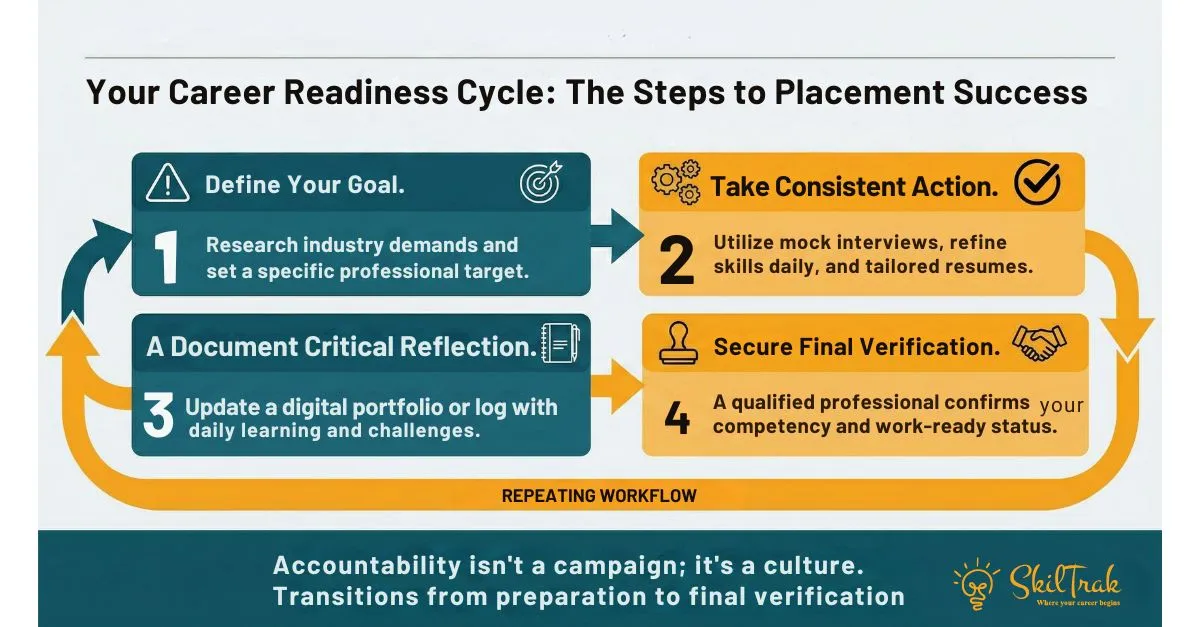
1. Implementing a Commitment Framework
Establishing a clear agreement that outlines expectations for attendance, resume deadlines, and professional conduct is essential. This framework is not disciplinary; rather, it provides the transparency students need to understand the standards of the professional world.
2. Tracking Objective Preparation
Visual data is a powerful motivator. By scoring resume quality, aptitude performance, and communication skills, institutions make the preparation process tangible. When students can see their readiness score in real time, accountability increases.
3. Enhancing the Severity of Evaluation
Mock interview training programmes should mirror industry expectations as closely as possible. Involving external industry professionals and alumni ensures that the evaluation is viewed as true and valid. This seriousness from the institution usually generates a serious response from the student.
4. Transitioning to Mentorship Groups
Smaller accountability groups allow for more direct feedback and peer learning. Weekly reporting on preparation progress within these groups reduces the tendency for students to disengage and builds a shared sense of responsibility.
The Role of Integrated Management Systems
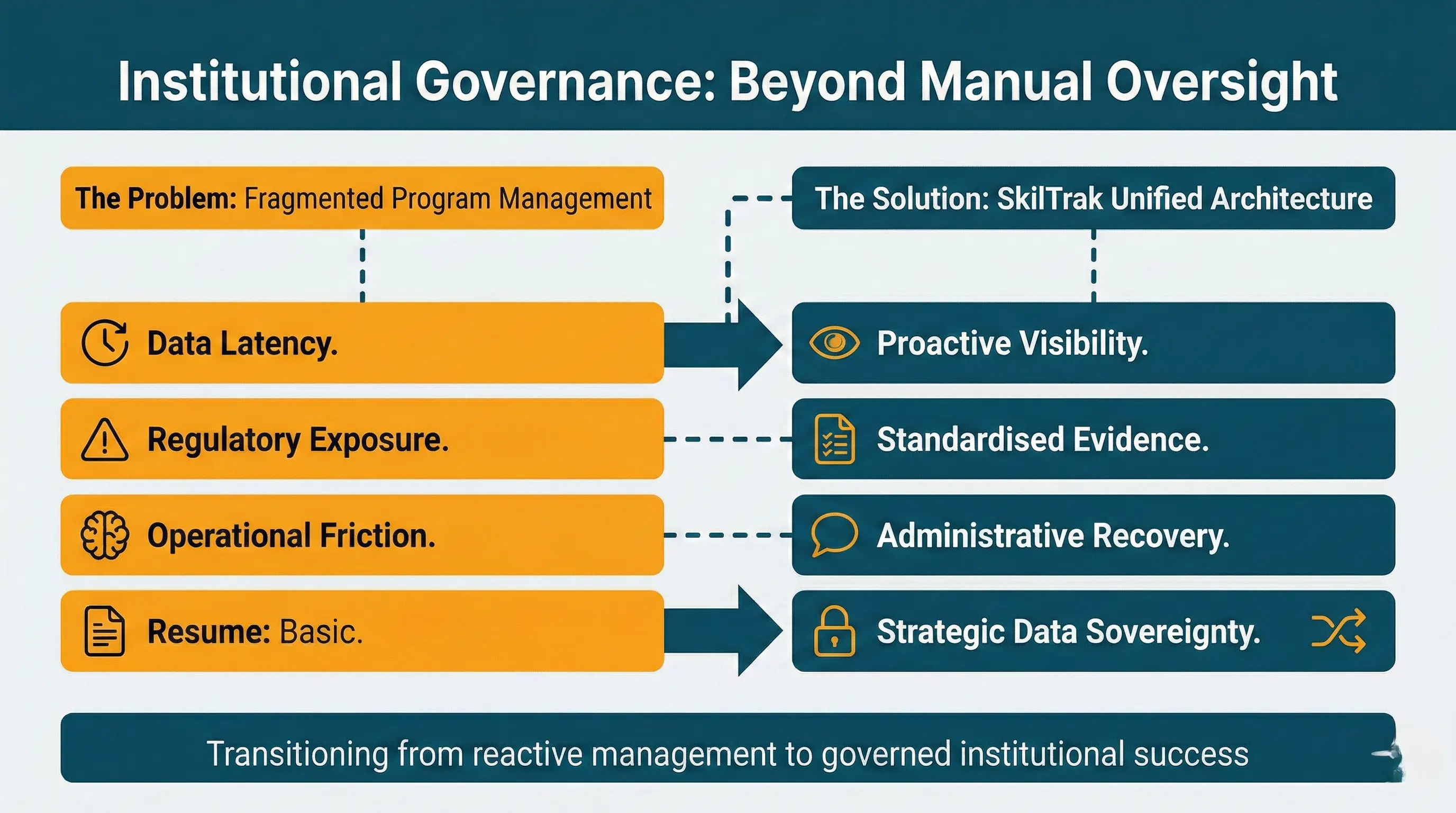
Modernising placement workflows requires reliable management systems to maintain visibility and coordination. Utilising structured placement management systems allows institutions to move away from fragmented spreadsheets towards centralised oversight. Skiltrak is one of the widely used platforms in Australia. Many training organisations and schools use it for placement management and accountability enhancement.
Using SkilTrak to track progress data and communication records, placement teams can identify engagement gaps early. This level of transparency ensures that both administrators and students operate with a clear understanding of their current standing and the necessary next steps.
Final Thoughts
Improving student accountability is not a temporary focus; it is an institutional commitment to professional discipline. By setting clear expectations, utilising measurable benchmarks, and fostering early career identity, institutions do more than improve their placement rates. They graduate professionals who are equipped with the sense of responsibility required for long-term career success. When accountability is embedded into the campus culture, proactive preparation becomes the standard, and student confidence increases accordingly.
Share this article