 Courses
Infection Control Training In Australia - Guide 2026
Infection control is one of the major problems in healthcare. Oftentimes, a single lapse in hand hygiene can lead to an outbreak. One improperly cleaned surface can compromise an entire ward. This is where infection control training becomes not just important; it's essential.
A carer working in aged care facilities, disability services, or acute hospital settings who understands how to prevent the spread of infections can save lives. Healthcare-associated infections affect millions of patients worldwide each year, many of which are preventable through proper training and adherence to protocols.
In this article, we explore infection control training and why it is needed in healthcare and community settings.
What Is Infection Control?
Infection control refers to the policies and procedures designed to minimise the risk of spreading infections, particularly in healthcare and community settings. It's about creating an environment that protects vulnerable individuals.
In aged care specifically, infection control takes on heightened importance. Elderly residents often have weakened immune systems, making them particularly vulnerable to infections. What might be a minor bug for a healthy adult could become life-threatening for someone in residential care.
The Australian Commission on Safety and Quality in Health Care emphasises that infection prevention and control in aged care must be a top priority, especially following lessons learned from recent global health challenges.
The 5 Fundamental Principles of Infection Control
Every healthcare worker should understand these core principles that form the foundation of effective infection prevention:
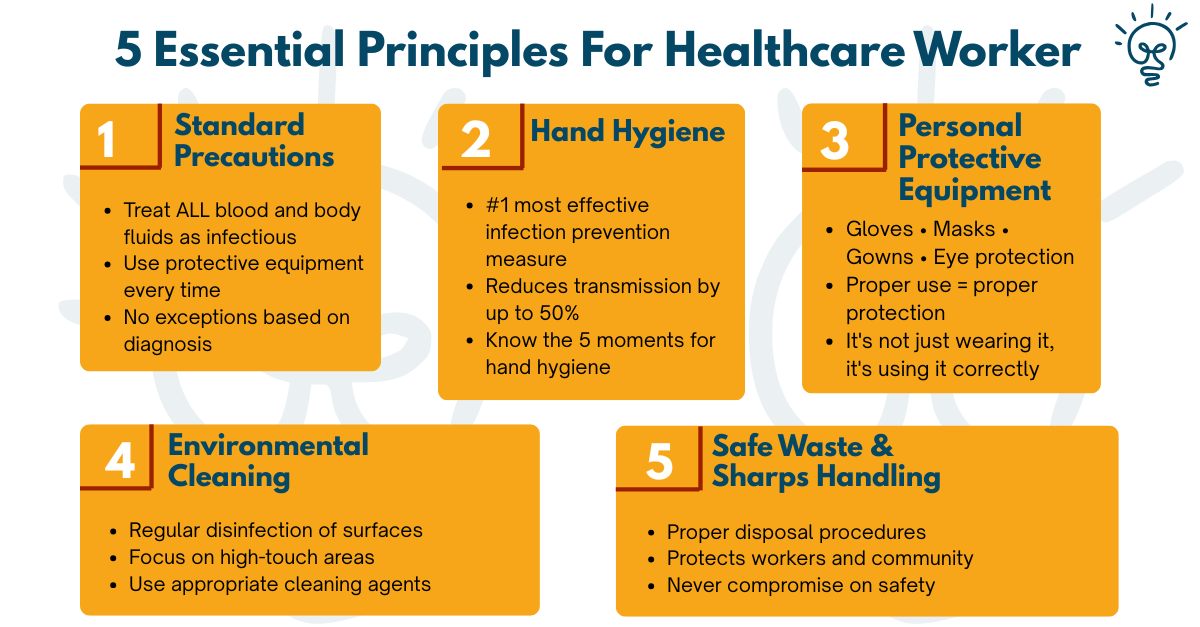
1. Standard Precautions: Treat all blood and body fluids as potentially infectious. This means using appropriate protective equipment regardless of whether you know someone's infection status.
2. Hand Hygiene: The single most effective measure to prevent infection spread. Proper handwashing technique and knowing the five moments for hand hygiene can reduce transmission rates by up to 50%.
3. Personal Protective Equipment (PPE): Knowing when and how to use gloves, masks, gowns, and eye protection correctly. It's not just about wearing PPE; it's about using it properly to prevent the spread of infection.
4. Environmental Cleaning: Regular disinfection of surfaces and equipment using appropriate cleaning agents. High-touch surfaces need particular attention.
5. Safe Handling of Sharps and Waste. Proper disposal procedures protect both workers and the wider community from exposure to infectious materials.
Getting Your Infection Control Certificate
Professional certification demonstrates your commitment to safe practices and is often required by employers. Here's what you need to know:
Available Training Options:
• Online courses that fit around your schedule • Face-to-face workshops with hands-on practice • Blended learning combining both approaches • Specialised programs for NDIS workers and aged care staff
Many reputable providers offer free online infection control courses or low-cost options, making essential training accessible to everyone in the healthcare sector. However, ensure any program you choose is accredited and recognised by Australian health authorities.
For NDIS workers specifically, infection control training in NDIS programs addresses the unique challenges of providing disability services in community settings, where environments are less controlled than traditional healthcare facilities.
Why Aged Care Demands Special Attention
Infection control in aged care in Australia has undergone significant scrutiny and improvement in recent years. The sector faces distinct challenges:
Residents live in close quarters, share common spaces, and often have multiple chronic conditions. Staff move between rooms, potentially carrying pathogens. Visitors come and go. All these factors create numerous opportunities for infection transmission.
The Aged Care Quality Standards now include specific requirements around infection prevention and control. Facilities must demonstrate robust systems, ongoing staff training, and compliance with hygiene protocols.
Key considerations for aged care workers include:
• Recognising early signs of infection in residents who may not clearly communicate symptoms • Understanding outbreak management procedures • Implementing appropriate isolation protocols when needed • Balancing infection control with residents' quality of life and dignity • Maintaining meticulous documentation
Breaking Down the Five Standard Precautions
While often confused with the broader principles, the five standard precautions are specific practices that apply to all patient care:
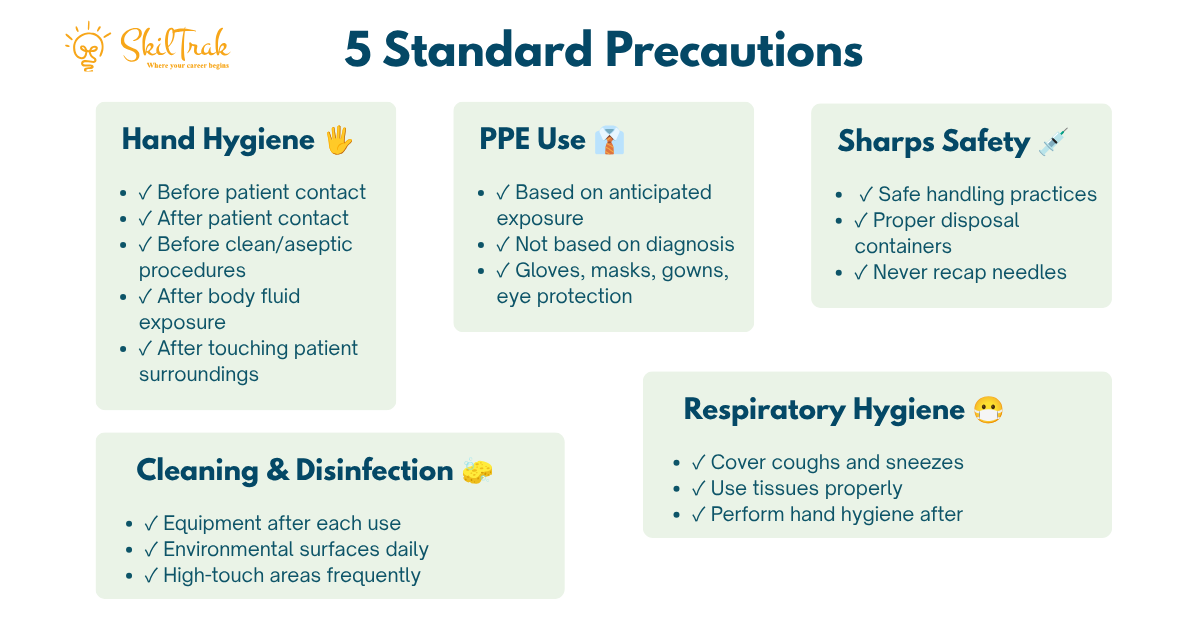
- Hand hygiene before and after every patient contact
- Use of PPE based on the anticipated exposure
- Safe handling and disposal of sharps and contaminated materials
- Cleaning and disinfection of equipment and environment
- Respiratory hygiene and cough etiquette to contain droplets
These precautions don't change based on a patient's diagnosis. They're the baseline defence, every time, with every person.
The Real-World Impact of Proper Training
Steps to be taken: A care worker in an aged care facility notices a resident has developed a fever and cough. With proper infection control training, they immediately:
- Isolate the resident appropriately
- Don correct PPE before providing care
- Alert the clinical team
- Implement enhanced cleaning protocols
- Monitor other residents for similar symptoms
Without that training? The infection could spread through the facility within days, affecting dozens of vulnerable residents.
Aged care facilities have seen devastating outbreaks when infection control measures weren't properly followed. Conversely, well-trained staff have successfully contained potential outbreaks before they escalated.
A single Flu from one patient can spread in a whole ward if not cared for properly, and it can affect all the patients. Specifically, those with chest issues or vulnerable individuals can have a drastic impact on them. But following the above steps properly can stop that from happening.
Staying Current With Ongoing Education
Infection control isn't a one-time learning topic. Different environments demand different procedures, and it requires constant practice and maintenance. Best practices are refined based on research. Guidelines get updated.
Regular refresher training ensures you stay current with:
- Updated cleaning protocols and new disinfectant products
- Emerging infectious diseases and how to respond
- Changes to national guidelines and standards
- New equipment and proper usage techniques
- Lessons learned from recent outbreaks
Most organisations require annual infection control training updates. But even if it's not mandated, seeking out new learning opportunities shows professional dedication.
Making Training Stick: From Knowledge to Practice
The gap between knowing what to do and actually doing it consistently is where many infection control programs fail. Here's how to bridge that gap:
Create reminders in your environment: Visual cues at handwashing stations, posters showing proper PPE donning sequences, and colour-coded cleaning systems all help reinforce training.
Practice scenarios regularly: Rather than waiting for an actual outbreak, trainers can run simulations or provide practical demonstrations using digital technologies.
Build a culture of accountability: When colleagues remind each other about hand hygiene or correct PPE use, it's not criticism; it's caring about each other's safety and that of those in your care.
Reflect on close calls: When something almost went wrong, talk about it. What prevented the problem? What could improve next time?
Final Thoughts
Infection control training isn't just another short course. It's the foundation of safe, quality care across all healthcare settings. From hospitals to aged care facilities to NDIS community services, the principles remain critical.
Every healthcare worker has a responsibility to understand and implement infection control measures. The residents, patients, and clients, depending on carers, deserve nothing less than complete commitment to prevent avoidable infections.
Whether just starting in healthcare or having been in the field for decades, there's always more to learn about keeping people safe. An infection control certificate demonstrates professional commitment, but the real value comes from applying that knowledge every single day.
Contact us at collaborations@skiltrak.com.au. SkilTrak will help you find an Infection Control Training provider.
Share this article
FAQ's
01
What is infection control training?
Infection control training teaches healthcare workers how to prevent the spread of infections through proper hand hygiene, PPE use, cleaning protocols, and safe waste handling. It provides practical skills to protect staff, patients, and residents from healthcare-associated infections.
02
What is infection control in aged care?
Infection control in aged care involves preventing and managing infections in residential facilities through strict hygiene protocols, staff training, environmental cleaning, and outbreak management. It's critical because elderly residents have weakened immune systems and live in close quarters.
03
What are the essential topics covered in a basic hygiene education program?
Basic hygiene programs cover the five moments of hand hygiene, proper handwashing technique, correct glove use, cough etiquette, personal hygiene standards, environmental cleaning, and preventing cross-contamination.
04
What are the 5 principles of infection control?
The five principles are: standard precautions for all patients, consistent hand hygiene, proper PPE use, thorough environmental cleaning, and safe waste management, including sharps disposal.
05
How can SkilTrak assist in the infection control training?
SkilTrak assists you by connecting with training providers and can help you find placements for these short courses. Usually, professionals want to do these short courses to equip themselves with in-demand skills. SkilTrak can assist in RPL.
06
What are the best infection control training courses available online for healthcare workers in Australia?
Look for ASQA-accredited courses from registered training organisations that include interactive modules, video demonstrations, and assessments. The Australian Government Department of Health website lists approved providers offering nationally recognised qualifications.
07
Where can I get certified training for aged care workers?
Registered training organisations across Australia offer certified programs through online, face-to-face, or blended learning. Check with industry groups like LASA or ACSA for recommended providers, or ask your employer about approved training partners.
08
Is infection control training required for NDIS workers?
Yes, infection control training is mandatory for most NDIS workers. These programs address unique challenges like maintaining hygiene across multiple community locations and supporting clients with varying health conditions in less controlled environments. SkilTrak can assist you by connecting with verified training providers and helping you find placement.