 Courses
Essential Nail Care and Therapy: Tips for Healthier, & Beautiful Nails
A lot of people don't care about their nails until something goes wrong, a break or an infection, or a sudden realisation that their hands look tired and neglected. But nail care isn't just about looking good. Your nails reflect a fair bit about your overall health, and consistently looking after them makes a real difference not just in how they look but in how they feel and function.
This guide covers everything from daily nail care habits to professional nail therapy, with practical tips on what actually works.
Why Nail Care Matters More Than You Think
Nails are often left unattended, something you address when they get too long or start causing problems. But regular nail care and attention are worth it. Healthy nails are a sign of good nutrition and hydration. Brittle, discoloured, or ridged nails can sometimes point to deficiencies in iron, biotin, or zinc or signal that your body is dealing with something else entirely.
In life, there's a practical side to it. Clean, well-maintained nails reduce the risk of bacterial and fungal infections, which are far more common than most people realise, particularly under the nails where dirt and moisture build up easily.
And yes, there's a confidence element too. Well-kept nails, whether bare or polished, leave a strong impression in professional and social settings. That's not vanity it's just the reality of how people are perceived when they pay attention to the finer details.
Building a Daily Nail Care Routine
The biggest mistake people make with nail care is treating it as something you do occasionally rather than consistently. The results you get from nail care are almost entirely down to routine, small habits done regularly over time.
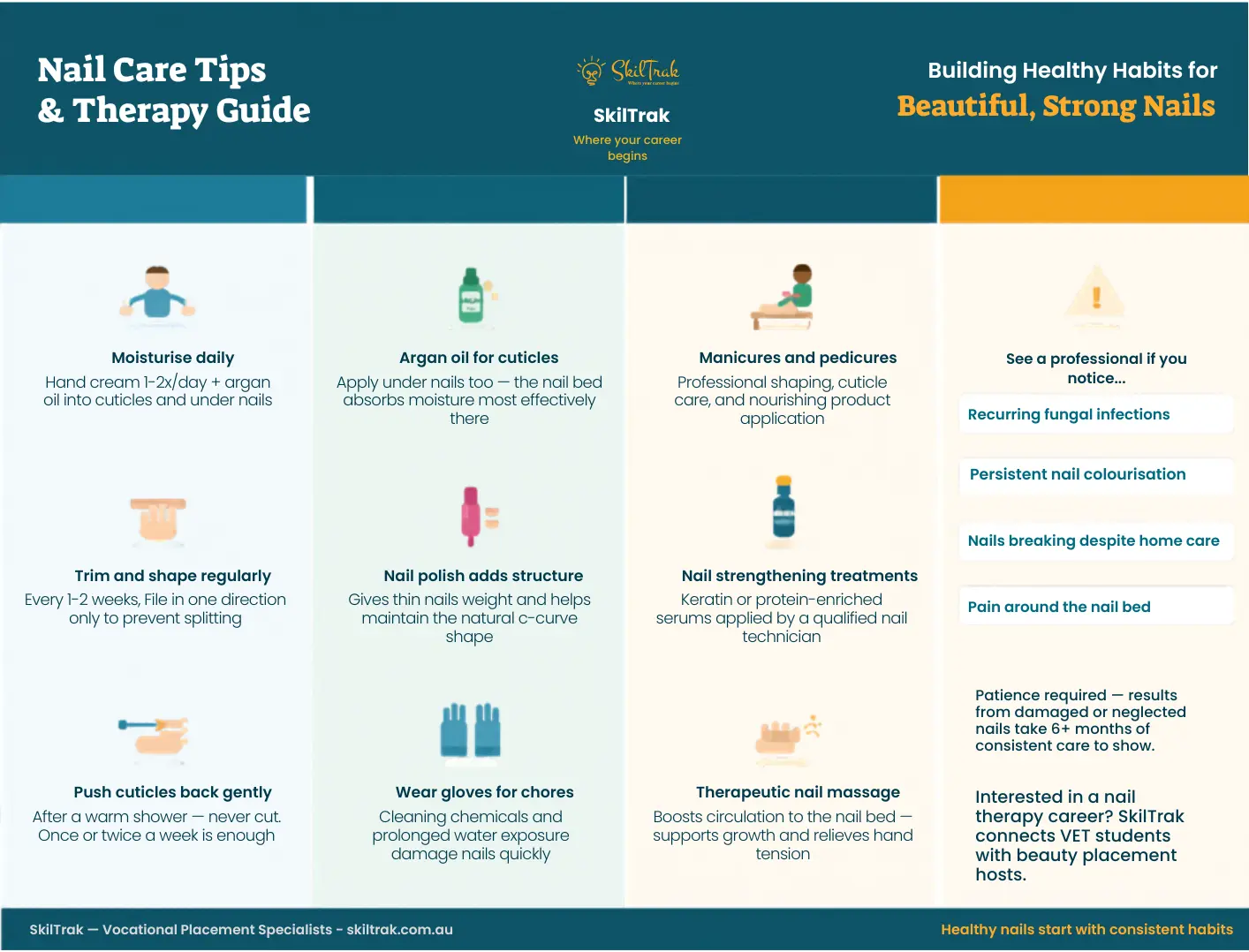
Keep your nails moisturised. Nails dry out just like skin does, and when they do, they become brittle and vulnerable to splitting. Apply a hand cream once or twice a day, and make a habit of massaging cuticle oil. Argan oil works particularly well into your cuticles and along the nail bed. One tip worth remembering: get the oil under your nails too, not just on top. That's where the nail bed absorbs moisture most effectively.
,Filing should go in one direction rather than back and forth, which weakens the nail edge. A glass or crystal file is gentler than an emery board if your nails are on the thinner side.
Push your cuticles back rather than cutting them. Cutting cuticles removes the protective seal between your nail and skin, which opens the door to infection. Gently pushing them back after a warm shower when they're soft is a safer and more effective approach. Over time, this alone can dramatically change the shape and appearance of your nails. People who have made this a consistent habit often notice that nails they assumed were naturally short or oddly shaped actually grow out much longer and more evenly than expected.
Wear gloves when you need to. Cleaning household products, prolonged water exposure, and gardening all take a toll on your nails and they include chemicals. On the safe side, gloves are the simplest line of defence and significantly reduce the wear your nails take from daily tasks.
Stop biting. Nail biting is one of the hardest habits to break precisely because it's often unconscious. One approach that works for some people is replacing the habit with something else, keeping cuticle oil nearby and reaching for that instead. It gives your hands something to do and actively benefits your nails at the same time.
Practical Tips From Real Experience
Sometimes the most useful nail care advice doesn't come from a book but from people who've actually worked through the problems themselves.
One thing that comes up consistently from people who've improved their nail health over time is that the changes are slow but genuinely significant. Someone who spent years biting their nails and assumed they simply had short nail beds found that after two years of consistent care daily hand cream, regular argan oil massages, and keeping polish on their nails looked completely different. Not because of any expensive product, but because of a steady, unglamorous routine.
A few specific takeaways from that kind of experience:
Nail polish, beyond its cosmetic role, actually adds a degree of structural support. For nails that are thin or flexible when bare, a layer of polish gives them a bit of weight and helps maintain the natural c-curve of the nail. If you've found your nails bend easily or lose their shape, trying a nail strengthening base coat under your regular polish is worth doing.
- Argan oil applied under the nail as well as over the cuticle is more effective than surface application alone. The underside of the nail tip absorbs moisture directly and responds well to oil-based hydration.
- Pushing cuticles back can become its own compulsive habit if you're not careful. Doing it gently once or twice a week is enough overdoing it can lead to soreness, redness, and damage to the cuticle's protective function. A little restraint goes a long way.
Progress takes months, not weeks. If you're starting from damaged, bitten, or neglected nails, expect to be at it for at least six months before you see the full picture. That's not discouraging, it's just realistic, and knowing it helps you stay consistent rather than giving up early. Nail care doesn’t have to be tiring it can be done after taking a bath or having a discussion with someone.
What Professional Nail Therapy Involves
Home care handles the day-to-day, but professional nail therapy goes a step further, particularly for people dealing with chronic nail problems or those who want to develop real skill in nail care.
- Manicures and pedicures are the most common professional treatments. Beyond the aesthetic finish, a good manicure includes cuticle care, hand massage to improve circulation, nail shaping, and, in many cases, the application of strengthening or nourishing products. A pedicure delivers similar care to the feet and is particularly useful for preventing ingrown toenails and managing calluses.
- Nail strengthening treatments are worth exploring if brittle nails are a frequent problem despite consistent home care. These treatments typically involve keratin or protein-enriched polishes or serums that reinforce the nail structure. A qualified nail technician can assess which treatment suits your nail type and apply it properly.
- Therapeutic nail massage is underrated. It improves blood circulation to the nail bed, which directly supports nail growth and health. For people who work at a keyboard all day or do repetitive hand movements at work, a proper hand and nail massage can relieve accumulated tension and noticeably improve how your hands feel. If you're booking a manicure, ask specifically for a massage component not all services include it unless you request it.
When should you see a professional rather than managing things at home? If you're experiencing recurring fungal infections, persistent discolouration that doesn't clear up, nails that continue to break despite consistent care, or significant pain around the nail bed, a professional is the right move. Some nail conditions also benefit from referral to a GP or dermatologist.
Nail Therapy as a Career
For those interested in nail care beyond personal use, nail therapy has become a recognised and growing vocational career path in Australia. Courses in nail therapy cover the full scope of practical skills, including manicures, pedicures, gel extensions, nail art, acrylic application, and the health and hygiene standards required to work professionally.
The appeal of the trade is its flexibility. Qualified nail technicians work in salons, spas, and beauty clinics, or build independent freelance practices. With the beauty and wellness sector consistently growing, demand for skilled nail therapists in Australia remains strong across both metropolitan and regional areas.
SkilTrak works with students completing vocational placements in the beauty sector, including those studying nail therapy, connecting them with host workplaces where they can complete their required practical hours as part of their qualification. If you're exploring a Certificate or Diploma-level course in beauty therapy or nail care through a registered training organisation (RTO) or TAFE, understanding how placement works before you enrol is worth doing early.
A Few Things Worth Remembering
Nail care is one of those areas where consistency beats intensity every time. You don't need an elaborate routine or expensive products you need a handful of good habits done reliably.
Moisturise daily. Trim regularly. Push cuticles back gently. Wear gloves when working with your hands. Give yourself time to see results, and get professional help when home care isn't enough.
The nails you have now aren't necessarily the nails you're stuck with. With the right routine and a bit of patience, the difference can be significant, and if you look back at photos from a year or two down the track, you'll likely be surprised by just how much has changed.
If you are a student looking for nail therapy or beauty placement opportunities, contact our team, and they will answer all your queries.
Share this article
FAQ's
01
What does the Nail Therapy course include?
The course includes essential skills such as manicures, pedicures, nail art, gel extensions, and industry-standard techniques for professional salon and spa services.
02
Who can benefit from the Nail Therapy course?
It will be an ideal course for people with aspirations of being a beauty professional, a nail technician, and anyone who desires to develop new skills in the care and therapy of nails.
03
What jobs can be gotten after this course?
The course graduates will end up becoming professionals in the use of nails for beauty salons or freelance, specializing in sophisticated nail care designs.